Choose perennials that can tolerate drought, says K-State expert
Domenghini says picking the right plant is ‘always important’
At a glance: A colorful garden of spring and summer flowers often begins with some good choices made in the fall, says Kansas State University horticulture expert Cynthia Domenghini.
More information: Cynthia Domenghini, Cdom@ksu.edu
Photo: Cynthia Domenghini
Related: K-State Horticulture Newsletter | Kansas Garden Guide | Prairie Bloom Perennial Flowers
Sept. 5, 2024
By Pat Melgares, K-State Research and Extension news service
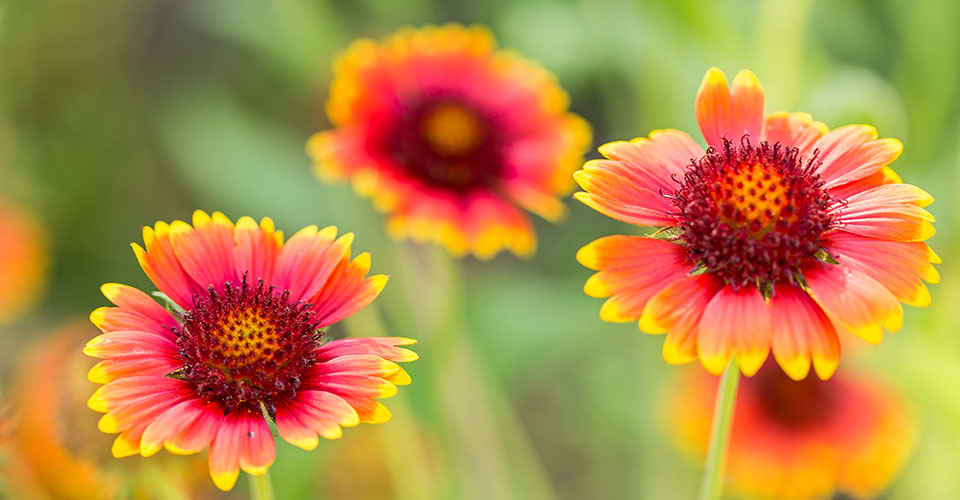
Gaillardia is among the perennials that are hardy during times of drought.
MANHATTAN, Kan. – A colorful garden of spring and summer flowers often begins with some good choices made in the fall, says Kansas State University horticulture expert Cynthia Domenghini.
“Fall is a great time to plant perennials, but since many parts of the state are experiencing drought conditions, you might want to consider your gardening practices,” Domenghini said.
She notes that selecting the right plants that can tolerate drought is “always important.” Her suggestions include:
Perennials – Aster, Monarda, Butterfly Weed, Coreopsis, Dianthus, Gaillardia, Garden Phlox, Black-eyed Susan.
Herbs – Artemisia, Basil, Lavender, Lemon Balm, Marjoram, Oregano, Sage, Thyme.
Ornamental Grasses – Big Blue Stem, Blue Fescue, Fountain Grass, Switchgrass, Porcupine Grass.
Shrubs – Lilac, Forsythia, Rose of Sharon, Cotoneaster, Viburnum, Ninebark, Mockorange, Juniper, Japanese Flowering Quince.
“If you’re one of the many gardeners who has been disappointed with their squash harvest, your plants may be suffering from poor pollination,” Domenghini said. “Many of the plants listed above will encourage pollinators to visit your garden and hopefully improve pollination next year.”
Domenghini said for fall planting, it is best to wait until the weather is cool but still enough time for roots to establish before the ground freezes.
“Though the above plants will be tolerant of drought once established, they will need supplemental water initially, especially during hot periods,” she said.
Domenghini and her colleagues in K-State’s Department of Horticulture and Natural Resources produce a weekly Horticulture Newsletter with tips for maintaining home landscapes and gardens.
Interested persons can subscribe to the newsletter, as well as send their garden and yard-related questions to Domenghini at cdom@ksu.edu, or contact your local K-State Research and Extension office.
# # #
Sidebar: Question of the Week
My junipers are covered in bagworms. What do I need to do?
Right now, make a reminder in your calendar for next May, which is when bagworms begin to emerge. If you have adult bagworms now, you will likely have a new round of larvae next year, as well.
Scouting for bagworms needs to be done from mid-May through early June to time treatment for best control. Unfortunately, the only thing you can do to prevent damage from the bagworms now is manually remove them from your plants and destroy the bags.
The worms are mature by now and most have stopped feeding. Males will be emerging soon (if not already) as moths, for mating. Treating with insecticides at this point in the season is not recommended, nor is it effective.
Read more about bagworm control in the publication, Bagworms.
 -- Cynthia Domenghini, K-State horticulture expert, Cdom@ksu.edu

K‑State Research and Extension is a short name for the Kansas State University Agricultural Experiment Station and Cooperative Extension Service, a program designed to generate and distribute useful knowledge for the well‑being of Kansans. Supported by county, state, federal and private funds, the program has county extension offices, experiment fields, area extension offices and regional research centers statewide. Its headquarters is on the K‑State campus in Manhattan. For more information, visit www.ksre.ksu.edu. K-State Research and Extension is an equal opportunity provider and employer.