It’s Fall, and leaves are everywhere
K-State horticulture expert suggests adding leaves to compost bins
At a glance: Keeping up with leaves every fall is a challenge. K-State horticulture expert Cynthia Domenghini says the amount of leaf cover on the ground has an impact on the underlying plants.
More information: Cynthia Domenghini, Cdom@ksu.edu
Related: K-State Horticulture Newsletter
Nov. 21, 2024
K-State Research and Extension news service
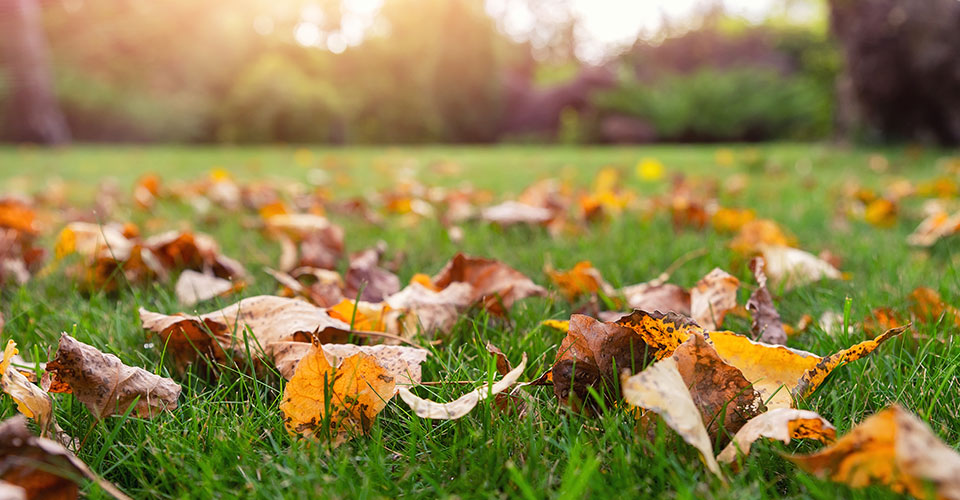
Picking up, mulching or composting leaves each fall is important in order to keep a thick layer from building up, which can restrict photosynthesis in the lawn.
MANHATTAN, Kan. — Cold temperatures came on quickly in Kansas, and leaves have fallen from most trees.
While keeping up with leaves every fall is a challenge, Kansas State University horticulture expert Cynthia Domenghini says the amount of leaf cover on the ground has an impact on the underlying plants.
“Photosynthesis will be restricted in a lawn covered with a dense layer of leaves, preventing it from storing enough energy to survive winter,” Domenghini said.
Leaves can be added to a compost heap, but Domenghini recommends shredding them first. This can be done by mowing over them on the lawn and collecting them in the mower bag or they can be added directly into the planters.
“Incorporate 2-3 inches of shredded leaves to the soil,” Domenghini said. “Shredded leaves can be used as mulch around trees, shrubs and perennials as well.”
Leaf mulch on lawns can help prevent weeds from germinating between grass plants. Leaf mulch has not been shown to negatively effect turf quality, color or soil pH as long as it is shredded, she said.
Shredded leaves can be left on the lawn if they are not too dense, Domenghini adds. As the lawn is mowed, the leaf pieces will fall in between the blades of grass and eventually break down into the soil.
“It may require multiple passes with the lawn mower to get the leaf size small enough. It is also necessary to mow frequently to keep up with the leaf drop,” Domenghini said.
If incorporating leaves into a cool-season lawn, Domenghini said it makes sense to be on a fall nitrogen fertilization program and have done core aeration this fall. You can mow leaves into a warm-season lawn but wait until late May or early June to fertilize and core-aerate, she said.
Domenghini and her colleagues in K-State’s Department of Horticulture and Natural Resources produce a weekly Horticulture Newsletter with tips for maintaining home landscapes and gardens.
Interested persons can subscribe to the newsletter, as well as send their garden and yard-related questions to hortsupport@ksu.edu, or contact your local K-State Research and Extension office.

K‑State Research and Extension is a short name for the Kansas State University Agricultural Experiment Station and Cooperative Extension Service, a program designed to generate and distribute useful knowledge for the well‑being of Kansans. Supported by county, state, federal and private funds, the program has county extension offices, experiment fields, area extension offices and regional research centers statewide. Its headquarters is on the K‑State campus in Manhattan. For more information, visit www.ksre.ksu.edu. K-State Research and Extension is an equal opportunity provider and employer.