Gardening has wellness benefits for all ages
Keeping your garden safe for all ages helps increase usability, K-State horticulture expert says
At a glance: K-State horticulture expert Cynthia Domenghini says gardeners can focus on tasks, tools and design as a means to realizing the wellness benefits behind the activity.
More information: Cynthia Domenghini, Cdom@ksu.edu
Related: K-State Horticulture Newsletter
March 4, 2025
K-State Research and Extension news service
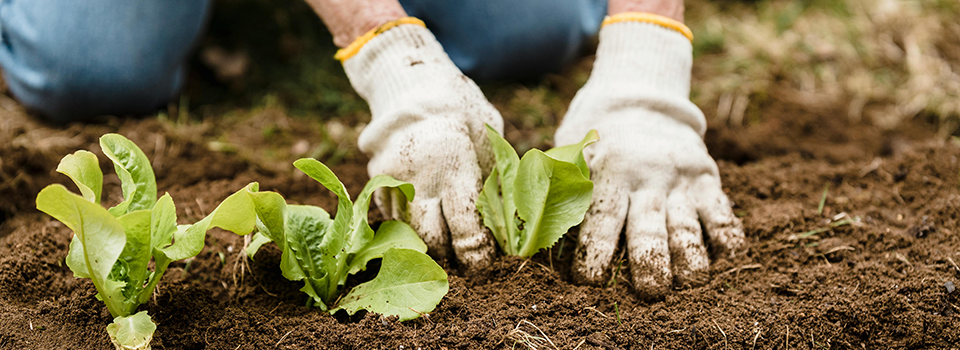
MANHATTAN, Kan. — Gardening provides a variety of wellness benefits. Varied abilities among gardeners means that adaptations to traditional practices are necessary to keep gardeners safe and successful, regardless of age.
Kansas State University horticulture expert Cynthia Domenghini said gardeners can focus on three areas: tasks, tools and design.
Tasks
If you’re gardening with a child, plan to spend plenty of time exploring and learning alongside them, Domenghini said. If time is limited, save challenging tasks for more experienced helpers or when you can do them alone later.
Certain tasks may be best done by a professional crew, if time and skills are limited.
“Make a list of the tasks that need to be accomplished each day and complete them in an order that varies the movements” Domenghini said.
Spending hours kneeling while weeding is going to cause strain, which can result in long-term damage. Domenghini recommended limiting such tasks to 15 minutes at a time followed by a task that requires different movement and posture.
“Keeping the garden small protects growers from becoming overwhelmed with maintenance. If you’re worried you won’t have enough produce, remember you can supplement your harvest by visiting the farmers market,” Domenghini said. “You can grow less and do good by supporting local farmers.”
She also suggests observing the garden from a different perspective.
“Identify ways to improve accessibility, such as increasing the raised beds to standing height,” Domenghini said.
Tools
Proper tool maintenance is important. Keep pruning tools sharp so less effort is required to make each cut, and keep wooden handles on shovels and rakes free from splintering.
“Use lightweight tools such as those made with plastic, carbon, fiber or aluminum handles,” Domenghini said. “Handle the tools prior to purchasing to ensure they are a good fit.”
Most gardeners prefer lightweight tools with a long handle as this prevents bending over to work and adding strain to the back. Short-handled tools may be a better fit for gardening while seated.
“Kneeling pads and benches can protect joints while also reducing soil compaction,” Domenghini said. “Rolling garden seats allow the gardener to sit while weeding and planting.”
Invest in a good pair of gloves that will accommodate any gardening task to protect you from cuts and the potential for infection, Domenghini said.
Store tools in a central location and avoid leaving tools out where they can become a trip hazard. Also, unplug power tools and never leave tools unattended when gardening with children.
“It is important for young gardeners to learn tool safety, which includes supervision,” Domenghini said.
Design
Garden pathways should be kept smooth and level to reduce the risk of falls.
“Window boxes, raised beds and a multitude of container types facilitate gardening while standing or seated,” Domenghini said. “Keep the size of planters less than three feet across to reduce the need for reaching. All points in this size planter can be reached with short-handled tools.”
Domenghini said the garden should allow for rest and relaxation. She suggests placing a comfortable seat in a shaded area of the garden.
“On days that are predicted to be warm, do garden work in the early morning hours,” Domenghini said.
Minimize maintenance with the garden design by choosing the right plants for the right places. Also include automatic irrigation, when possible, to reduce the amount of time spent watering.
Bring your phone with you to the garden, especially if you garden alone in case you need help. But, she says, also bring a book to encourage taking a break, and do some reading in the shade.
“There are many considerations to make when designing a garden that is safe for everyone,” Domenghini said.
Domenghini and her colleagues in K-State’s Department of Horticulture and Natural Resources produce a weekly Horticulture Newsletter with tips for maintaining home landscapes and gardens.
Interested persons can subscribe to the newsletter, as well as send their garden and yard-related questions to hortsupport@ksu.edu, or contact your local K-State Research and Extension office.
***

K‑State Research and Extension is a short name for the Kansas State University Agricultural Experiment Station and Cooperative Extension Service, a program designed to generate and distribute useful knowledge for the well‑being of Kansans. Supported by county, state, federal and private funds, the program has county extension offices, experiment fields, area extension offices and regional research centers statewide. Its headquarters is on the K‑State campus in Manhattan. For more information, visit www.ksre.ksu.edu. K-State Research and Extension is an equal opportunity provider and employer.