In the Garden: March signals time to plant rhubarb
K-State horticulture expert says vegetable should not be harvested the first year
At a glance: K-State horticulture expert Cynthia Domenghini says gardeners wanting to grow rhubarb may need to be patient. The popular vegetable used in jellies, sauces and pies usually can't be harvested the first year.
More information: Cynthia Domenghini, Cdom@ksu.edu
Related: K-State Horticulture Newsletter | Rhubarb (publication)
March 6, 2025
By Pat Melgares, K-State Research and Extension news service
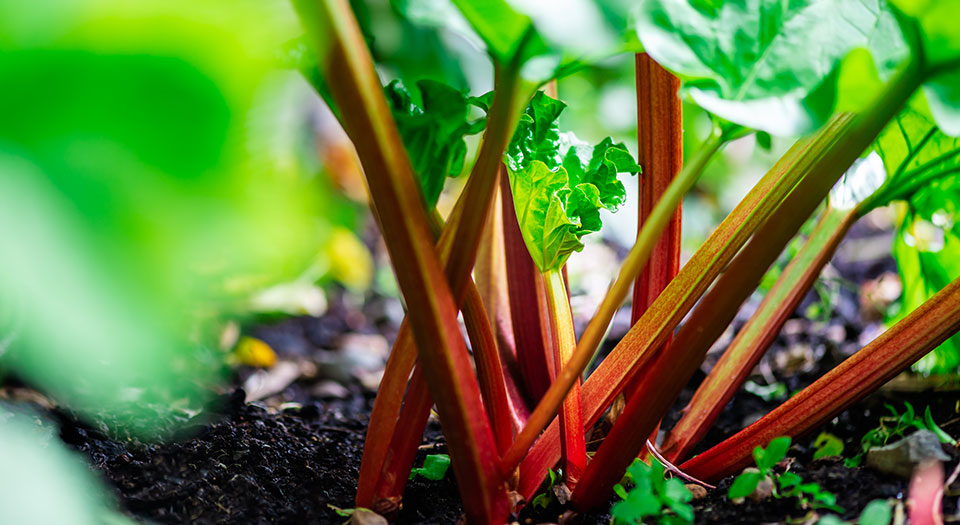
Once established, the bright pink stalks of rhubarb come into season in late March to early April and can stick around until the beginning of June.
MANHATTAN, Kan. — Let’s set the record straight: Rhubarb is a vegetable, though it’s often put to the same culinary uses as fruit. Think jellies, sauces and pies.
The confusion on rhubarb’s standing in the food world may stem from a 1947 decision by the U.S. Department of Agriculture to classify it as a fruit because tariffs on bringing fruit into the country were lower than those for vegetables.
In some home gardens, rhubarb is a tell-tale sign of spring. Once established, the bright pink stalks come into season in late March to early April and can stick around until the beginning of June.
For those gardeners wanting to establish rhubarb, Kansas State University horticulture expert Cynthia Domenghini says the timeframe for planting rhubarb crowns is mid-March to early April.
“One of the biggest concerns with growing rhubarb is crown rot,” Domenghini said. “Begin with healthy, disease-free plants, and plant in well-drained or mounded soil.”
She suggests placing mulch around plants to minimize weeds, but monitor for slugs and snails.
“Wait to divide existing plants until they are at least three years old, and make sure each division has a large ‘eye,’ or bud,” Domenghini said. “Plants will decrease productivity if not divided after growing for 5-10 years.”
To divide rhubarb plants:
- Dig a shallow trench and bury each plant so the bud is ½ to 1 inch below the soil surface.
- Space plants 2-3 feet apart.
- Gently pack the soil over the plants.
“During the first year of growth, rhubarb should not be harvested,” Domenghini said. “A few stalks can be harvested during the second year. This will allow plants to become well established and highly productive. The harvest window lasts about eight weeks.”
She said that if seed stalks develop, “break them off right away to direct energy to the crown and roots.”
Also, Domenghini notes, don’t eat rhubarb leaves. They contain oxalic acid, which can cause sores on the mouth if eaten.
More information on growing and maintaining rhubarb is available for free online from the K-State Research and Extension bookstore.
Domenghini and her colleagues in K-State’s Department of Horticulture and Natural Resources produce a weekly Horticulture Newsletter with tips for maintaining home landscapes and gardens.
Interested persons can subscribe to the newsletter, as well as send their garden and yard-related questions to hortsupport@ksu.edu, or contact your local K-State Research and Extension office.
***
Sidebar
Question of the Month: Why do some people start plants by seed versus transplants?
Some plants perform better when planted by seed while others do best when transplanted. For many plants, starting either way is fine.
Root vegetables, such as carrots, turnips and beets, tend to not transplant well. Cole crops such as broccoli, cauliflower, cabbage and Brussels sprouts should be transplanted so they will mature before the heat arrives and slows down production.
Starting plants from seed can be less expensive, but transplants have established roots giving them a head start on the season without having to nurture tender seedlings.
 -- Cynthia Domenghini, K-State horticulture expert
***

K‑State Research and Extension is a short name for the Kansas State University Agricultural Experiment Station and Cooperative Extension Service, a program designed to generate and distribute useful knowledge for the well‑being of Kansans. Supported by county, state, federal and private funds, the program has county extension offices, experiment fields, area extension offices and regional research centers statewide. Its headquarters is on the K‑State campus in Manhattan. For more information, visit www.ksre.ksu.edu. K-State Research and Extension is an equal opportunity provider and employer.