Asian longhorned tick confirmed in Kansas for the first time
K-State veterinarian urges awareness for state’s cattle producers
At a glance: Kansas animal health officials have confirmed the state’s first case of the invasive Asian longhorned tick, found in early October on a dog in Franklin County.
More information: AJ Tarpoff, 785-532-1255, tarpoff@ksu.edu
Photos: Asian Longhorn Tick | Tick swarm on cow udder | Ticks on wheat
Related: Ticks in Kansas
Oct. 21, 2025
By Pat Melgares, K-State Extension news service
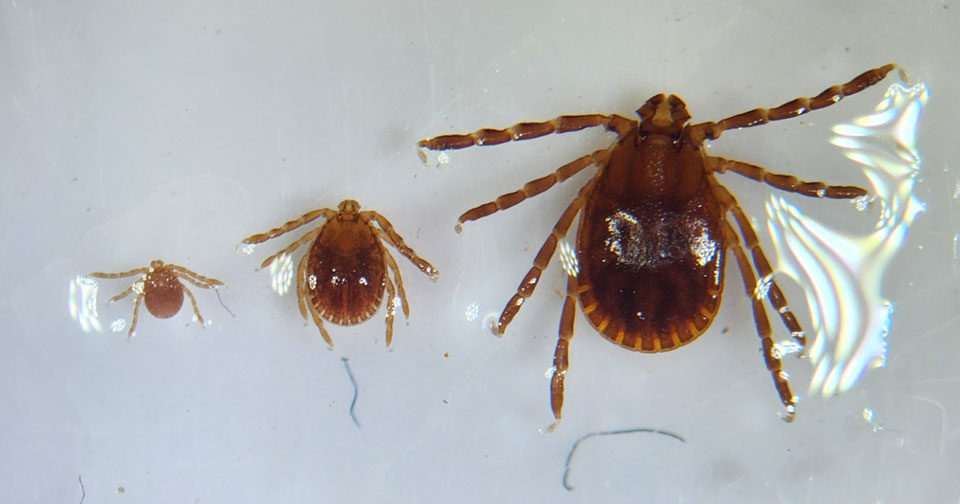 MANHATTAN, Kan. — Kansas animal health officials have confirmed the state’s first case of the invasive Asian longhorned tick, found in early October on a dog in Franklin County.
The discovery was made through a passive surveillance program managed by the Kansas Department of Health and Environment. A local veterinarian submitted the tick for testing, which later confirmed the presence of the species.
At right: Asian Longhorned Tick. Photo courtesy of Joshua Jackson, a graduate student in K-State's Department of Animal Sciences and Industry | Download this photo
“This is a first indication that we have it here in the state of Kansas,” said Kansas Animal Health Commissioner Justin Smith. “It’s not unexpected, just something to be aware of. We’ve seen it move across the U.S.; it was originally found on the East Coast.”
Listen to an interview by Shelby Varner with Justin Smith and AJ Tarpoff on the weekday radio program, Agriculture Today
Asian longhorned ticks have been spreading rapidly since first appearing in New Jersey in 2017. Known for their ability to reproduce asexually — without mating — all confirmed populations consist entirely of females.
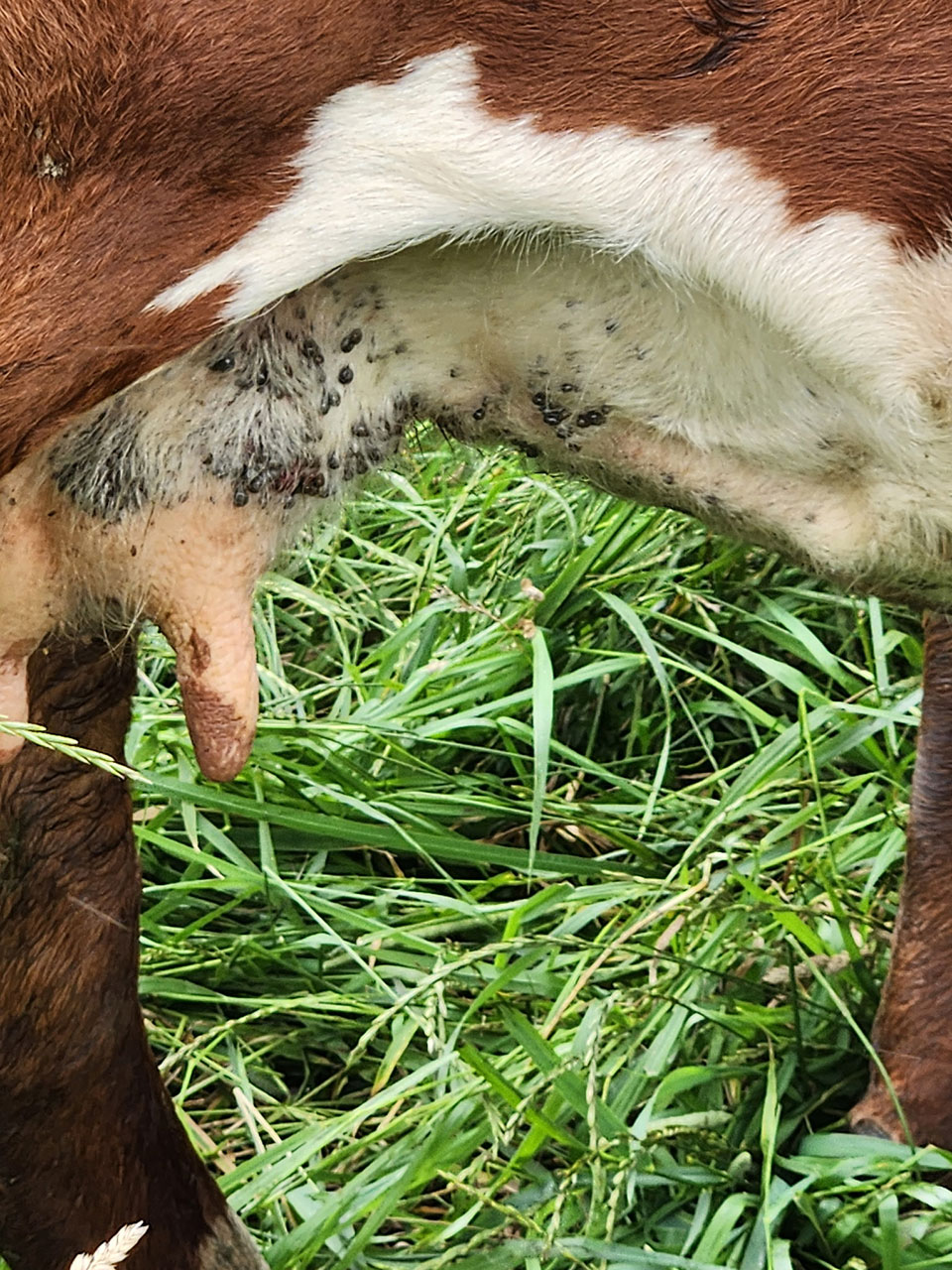 “One of the unique things about this tick is that when you find one, you typically find many,” Smith said. “They swarm. Animals have been reported with hundreds or even thousands of ticks at a time.”
At right: Swarm of Asian Longhorned Ticks on a cow's udder | Download this photo
While officials urge awareness, they are not raising alarm. “It’s more about making people aware,” Smith said. “We knew it would likely reach us eventually, especially in the eastern part of the state.”
Kansas State University extension veterinarian AJ Tarpoff echoed that sentiment, advising livestock producers and residents across Kansas to remain vigilant.
“It’s good for all animal owners and just people in general to keep an eye out,” Tarpoff said. “Kansas is on the edge of the tick’s viable habitat, but the eastern and southeastern regions are most at risk.”
Tarpoff noted that the tick’s spread is influenced by animal hosts — most commonly dogs, white-tailed deer and cattle — and favored environments like brushy field edges and cedar thickets. “It’s not spread evenly across the landscape,” he said. “Where you find large mammals, you’re more likely to find this tick.”
The primary concern for cattle producers is the Asian longhorned tick’s role as a vector for the blood-borne disease Theileria, which according to Tarpoff, “causes anemia and can impact both young and mature cattle. It’s similar to anaplasmosis, which Kansas producers are familiar with, but Theileria affects young calves too.”
Kansas has previously diagnosed Theileria in cattle imported from the east, but the tick's presence now raises concern about local transmission.
 Tarpoff emphasized that prevention is key. “We have good tick control measures in place—prescribed burning, grazing management, and regular veterinary care,” he said. “Stay diligent. If something looks abnormal, reach out to your vet.”
Smith added that the Asian longhorned tick is a reportable pest in Kansas.
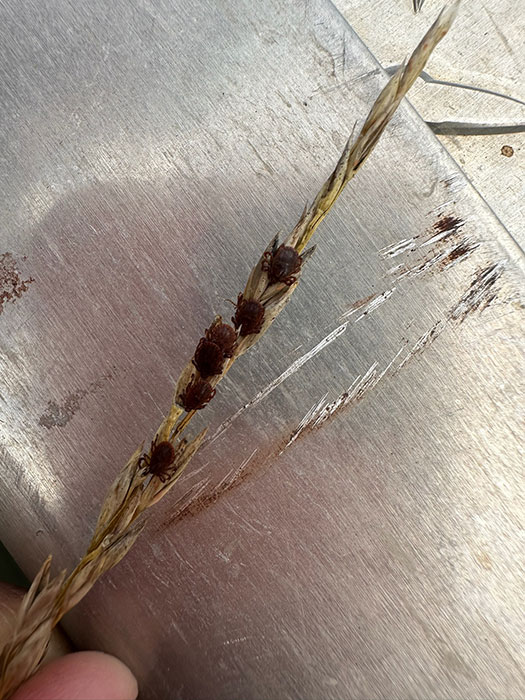
At left: Asian longhorned ticks on wheat | Download this photo
“If producers or veterinarians suspect they’ve found one, they should contact us or work through their veterinarian to report it,” he said.
While the tick poses a new challenge, both officials stressed that early detection and ongoing awareness are the best tools for managing its impact.
“We’re not raising red flags,” Smith said. “We just want people to know it’s here, so they can take the right steps.”
A longer discussion with Smith and Tarpoff is available on the Oct. 16 episode of Agriculture Today, produced by Kansas State University.
***

K‑State Research and Extension is a short name for the Kansas State University Agricultural Experiment Station and Cooperative Extension Service, a program designed to generate and distribute useful knowledge for the well‑being of Kansans. Supported by county, state, federal and private funds, the program has county extension offices, experiment fields, area extension offices and regional research centers statewide. Its headquarters is on the K‑State campus in Manhattan. For more information, visit www.ksre.ksu.edu. K-State Research and Extension is an equal opportunity provider and employer.