Cattle Chat: Bull selection strategies
K-State beef cattle experts discuss the upcoming Legacy bull sale and what producers might want to consider prior to making a purchasing decision
At a glance: K-State Beef Cattle Institute experts sit down with Christian Magana, manager of the K-State Purebred Beef Unit, and Jason Warner, K-State cow-calf extension specialist, emphasizing aligning bull selection with herd goals, prioritizing fertility and structural soundness and using genetic tools wisely to make long-term investments that improve herd performance.
More information:
Brad White, 785-532-4243, bwhite@vet.k-state.edu
Jason Warner, 785-532-1460, jasonwarner@ksu.edu
Christian Magana, 785-565-1881, cjmagana@ksu.edu
Related: Beef Cattle Institute Cattle Chat Podcast
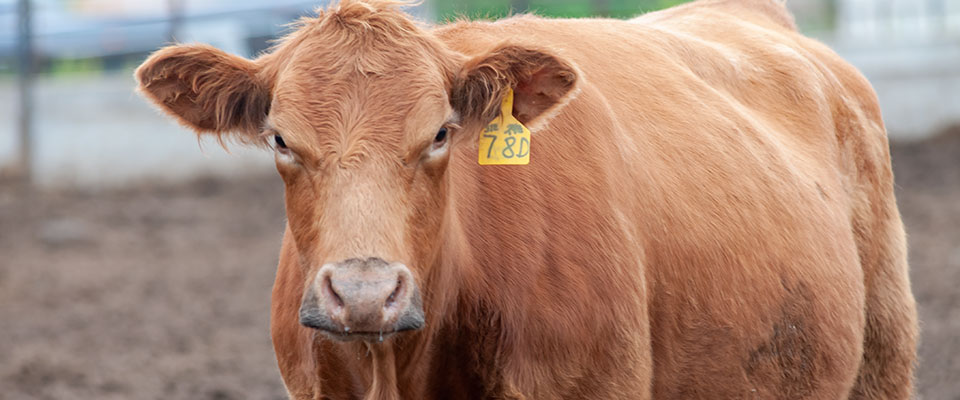
Purchasing a bull should be based on the goals of the producer's operation, according to K-State experts. The university's annual Legacy Bull Sale will be held March 6 in Manhattan.
Feb. 24, 2026
By Chevy-Lynn Vaske, K-State Extension news service
MANHATTAN, Kan. — Making sound bull purchasing decisions can be one of the most important management choices a cattle operation makes, according to experts speaking on Kanaas State University’s Beef Cattle Institute Cattle Chat podcast.
The team sat down with K-State Purebred Beef Unit Manager Christian Magana and Jason Warner, cow-calf extension specialist, to discuss bull selection strategies producers can use to improve herd performance.
Magana emphasized the importance of defining clear breeding objectives before making a purchase. “A bull should match the goals of your operation — whether that’s maternal performance, calving ease, or terminal traits — because genetics are a long-term investment,” he said.
Warner and Magana highlighted that K-State's Legacy bull sale magazine offers expected progeny differences (EPD’s) that can aid the producer in making the decision for their operation, rather than overwhelming producers with so many numbers.
Warner added that fertility and soundness need to be prioritized alongside genetic potential.
“Breeding soundness and structural soundness are fundamental; if a bull can’t do his job physically or reproductively, all the genetics in the world don’t matter,” he said.
The BCI team also highlighted the upcoming Legacy Bull Sale, stressing that producer preparation and a clear understanding of herd goals can make the difference between a good purchase and an outstanding one.
To hear the full discussion on bull buying decisions and other industry insights, visit the BCI website or listen to the latest Cattle Chat episode on your preferred podcast platform. Send questions by email to bci@ksu.edu.
***

K‑State Extension is a short name for the Kansas State University Cooperative Extension Service, a program designed to generate and distribute useful knowledge for the wellbeing of Kansans. Supported by county, state, federal and private funds, the program has county extension offices statewide. Its headquarters is on the K‑State campus in Manhattan. For more information, visit www.ksre.ksu.edu. K-State Extension is an equal opportunity provider and employer.