How to incorporate native plants in the garden
K-State horticulture expert says native plants promote biodiversity
At a glance: Native plants can restore biodiversity to a home garden or other areas, says K-State horticulture expert Matt McKernan. Some plants to consider for a landscape include Bee Balm, Witch Hazel, False Indigo and Serviceberry.
More information: Matt McKernan, hortsupport@ksu.edu
Related: K-State Horticulture Newsletter
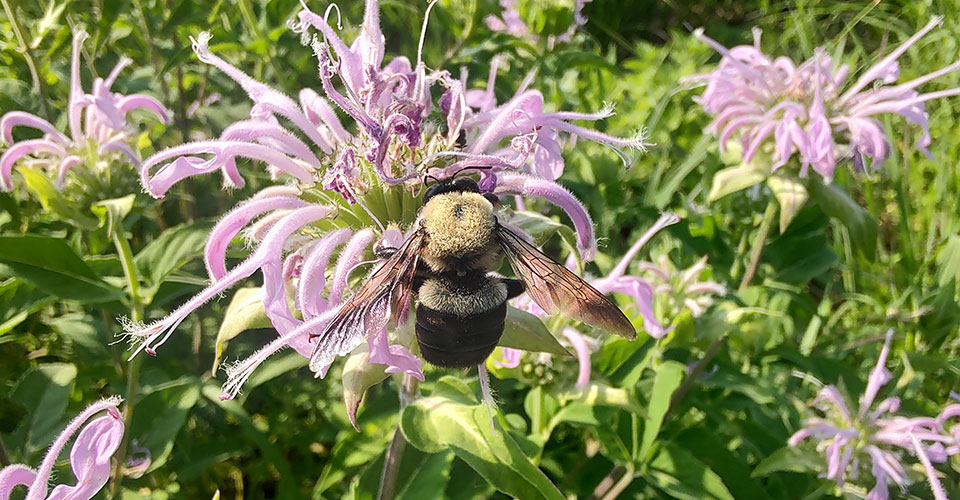
K-State horticulture expert says native plants promote biodiversity.
Feb. 19, 2026
K-State Extension news service
MANHATTAN, Kan. — Restoring biodiversity in a home garden or any area can be done by incorporating native plants, said Kansas State University horticulture expert Matt McKernan.
“Native plants promote biodiversity by providing food and housing for wildlife that are indigenous to the area,” McKernan said. “At the same time native plants can also limit the amount of maintenance needed in our garden, creating a win-win scenario.”
Native plants are adapted to a specific area, according to McKernan. A native landscape has balance between the animals and plants, enabling them to co-exist. Once established, native plants often require less supplemental water, fertilizer, pest management and overall maintenance than non-natives.
“Less human interference equals greater biodiversity,” McKernan said. “Native habitats are beneficial as a food source for wildlife.”
Some species of wildlife are non-specific in the types of plants they prefer, while others require certain types of plants.
“Incorporating a variety of native plants will encourage more diversity of wildlife to your landscape,” McKernan said.
Native plants to consider for a landscape include Bee Balm, Witch Hazel, False Indigo and Serviceberry.
“Bee balm grows 2-3 feet tall and wide,” McKernan said. “The tubular-shaped pink and purple blooms appear in June through August attracting bees, hummingbirds and butterflies.” The leaves have also been used for herbal teas.
Witch Hazel grows best in the fall and winter, blooming yellow flowers that are great for feeding bees at a time when most other plants are dormant, McKernan added.
"This large shrub can reach 15-20 feet and prefers a moist, shaded location,” he said.
False indigo is a perennial that reaches more than three feet in height and width.
“It prefers full sun and is a nitrogen fixer. The lovely summer blooms are inviting to butterflies and bees,” McKernan said.
Serviceberry is native to eastern Kansas and produces fruit that resembles the taste of blueberries in mid-summer.
McKernan suggests the following tips when adding native plants to a garden:
- Choose plants that naturally grow in the habitats available in your landscape, considering shade, wind, slope, and more.
- Use the local native plant organizations for region-specific advice.
- Purchase native plants locally from a reputable source.
- Manage the native landscape with as little interference as possible, including no fertilizer or herbicides.
“There is no need to remove exotic or alien plants from the landscape unless they are problematic to the goals of the area,” McKernan said. “There is certainly room for introduced plants that bring you joy alongside regional natives.”
McKernan and his colleagues in K-State’s Department of Horticulture and Natural Resources produce a weekly Horticulture Newsletter with tips for maintaining home landscapes and gardens.
Interested persons can subscribe to the newsletter, as well as send their garden and yard-related questions to hortsupport@ksu.edu, or contact your local K-State Extension office.
***

K‑State Extension is a short name for the Kansas State University Cooperative Extension Service, a program designed to generate and distribute useful knowledge for the wellbeing of Kansans. Supported by county, state, federal and private funds, the program has county extension offices statewide. Its headquarters is on the K‑State campus in Manhattan. For more information, visit www.ksre.ksu.edu. K-State Extension is an equal opportunity provider and employer.