Do I need to test my garden’s soil?
K-State horticulture expert recommends soil testing to prepare for spring gardens
At a glance: K-State horticulture expert Matt McKernan suggests a pre-spring soil test to help ensure soil has the nutrients it needs.
More information: Matt McKernan, hortsupport@ksu.edu
Related: K-State Horticulture Newsletter | Kansas Garden Guide
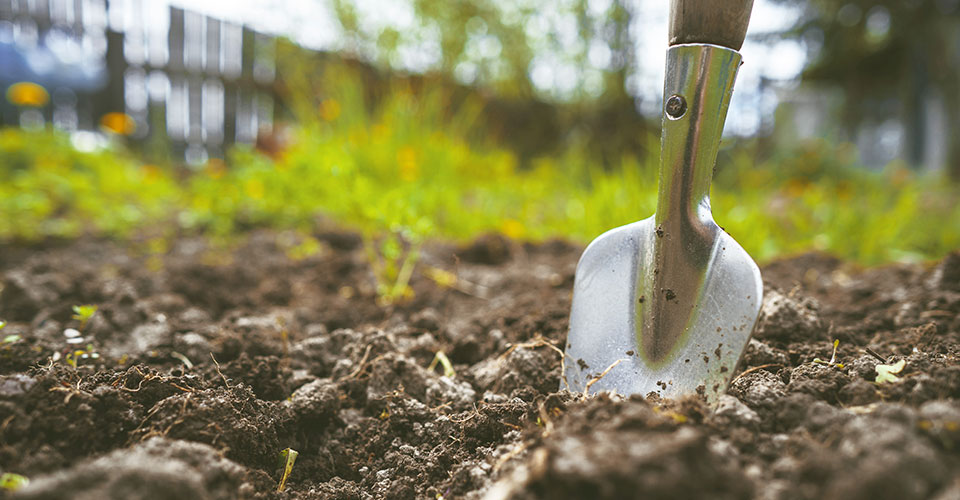
K-State horticulture expert recommends soil testing to prepare for spring gardens.
Feb. 12, 2026
K-State Extension news service
MANHATTAN, Kan. — Most gardeners think soil testing only determines nutrient deficiencies, but the tests also help gardeners understand whether the soil contains adequate nutrients. Basic tests check the soil’s pH, as well as the phosphorus and potassium levels.
“Most of the lawn and garden soil tests that come out of our soil-testing lab (at Kansas State University) show more than adequate levels of both phosphorus and potassium,” K-State horticultural expert Matt McKernan said. “If those nutrients are not needed, applying them is a waste of money and can be a source of pollution.”
McKernan urges gardeners to test their garden’s soil before beginning spring gardening, particularly if the soil hasn’t been tested in several years.
To do so, he says, take a sample from at least eight different locations in the garden or lawn. Samples should be taken at a depth between the surface and six inches, depending on the area being sampled. Next, mix the samples together in a clean bucket, until a total of one pint of soil has been collected.
More information on taking an accurate soil test is available online from the K-State Agronomy Soil Analysis lab.
According to McKernan, the soil sample can then be submitted to your local K-State Extension office to have tests done at the K-State soil testing laboratory for a fee.
“A soil test determines fertility problems, not other conditions that may exist, such as poor drainage, poor soil structure, soil borne diseases or insects, chemical contaminants or damage,” McKernan said. “All of these conditions may reduce plant performance but cannot be evaluated by a soil test.”
McKernan recommends submitting dry soil samples, as wet soil has different precautions.
“Wet soil samples should be air-dried on a clean sheet of paper or plastic before being submitted for testing,” McKernan said. “Do not use artificial means of drying such as an oven or microwave as such treatment may result in inaccurate readings of nutrient levels.”
Soil tests should be used as a tool to identify nutrient deficiencies, McKernan said, but often they do not tell the whole story of other factors affecting plant growth.
Additional factors that can affect plant growth include:
- Not enough sun.
- Poor soil physical characteristics.
- Walnut trees (walnuts give off a natural herbicide that interferes with the growth of some plants, such as tomatoes).
- Tree roots.
- Shallow soils.
- Improper watering.
McKernan and his colleagues in K-State’s Department of Horticulture and Natural Resources produce a weekly Horticulture Newsletter with tips for maintaining home landscapes and gardens.
Interested persons can subscribe to the newsletter, as well as send their garden and yard-related questions to hortsupport@ksu.edu, or contact your local K-State Research and Extension office.
***

K‑State Extension is a short name for the Kansas State University Cooperative Extension Service, a program designed to generate and distribute useful knowledge for the wellbeing of Kansans. Supported by county, state, federal and private funds, the program has county extension offices statewide. Its headquarters is on the K‑State campus in Manhattan. For more information, visit www.ksre.ksu.edu. K-State Extension is an equal opportunity provider and employer.