Being outdoors helps to spur better mental and physical health
K-State experts sound off on the benefits of nature during Walk Kansas webinar
At a glance: Stepping outside for even a few minutes each day can deliver measurable health benefits, according to Kansas State University researchers.
More information:
Gina Besenyi, gbesenyi@ksu.edu
Emily Mailey, emailey@ksu.edu
Related: Walk Kansas | K-State School of Health Sciences
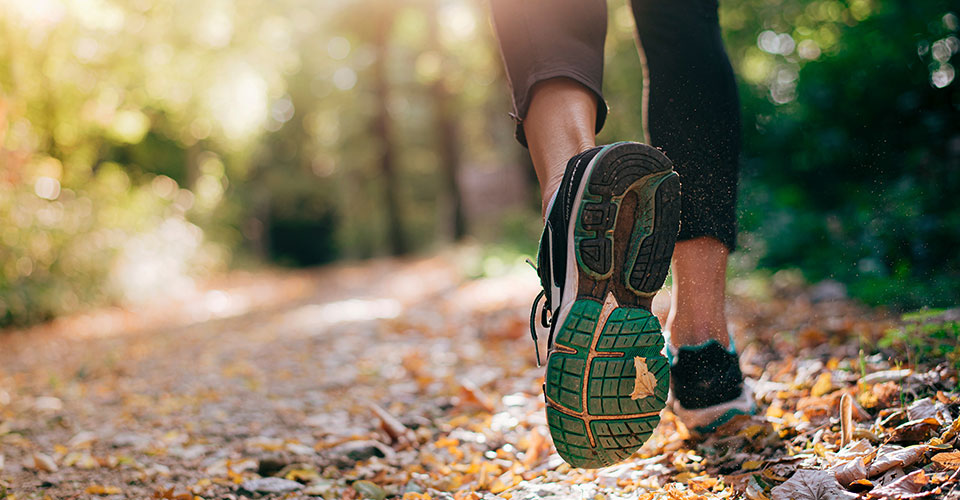
Being outdoors -- even for a small amount of time -- can provide measurable health benefits, said two Kansas State University health experts.
April 6, 2026
By Pat Melgares, K-State Extension news service
MANHATTAN, Kan. — Stepping outside for even a few minutes each day can deliver measurable health benefits, according to Kansas State University researchers who say nature exposure -- even without vigorous exercise -- plays a powerful role in overall well-being.
The topic was the focus of an April 1 Walk Kansas webinar, “Energize Your Workday: Movement and Nature for Focus and Vitality,” featuring Gina Besenyi and Emily Mailey, associate professors in the K-State School of Health Sciences.
“Being physically active is good for us, but we also receive a lot of health benefits engaging with nature,” Besenyi said. “Just spending time in nature, in and of itself, can help lower your blood pressure, improve your heart rate and activate your immune system.”
Besenyi, who also directs physical activity initiatives in the K-State Physical Activity Research in Community Settings (PARCS) Lab, said even low-effort activities -- such as sitting outside, reading or taking a short break outdoors -- can produce meaningful health gains.
“Even if you're not being active in nature, but just going outside and taking a break … there is going to be some really cool benefits,” she said.
Over time, those small habits can add up. Research shows that people who spend more time outdoors tend to become more physically active overall, even if their initial outdoor activity is sedentary.
“The act of getting up and going outside is getting you more physical activity than if you never left the house at all,” Besenyi said.
Long-term exposure to nature is also associated with reduced risks of chronic conditions, including obesity, asthma, stroke and diabetes, as well as lower overall mortality rates, she said.
Besenyi said that nature’s impact goes beyond physical health. Time outdoors can help restore mental focus, reduce stress and improve mood and energy levels.
“We're able to reduce some of the stress and anxiety or rumination and worrying that we have in our day-to-day lives,” she said. “It can improve our mood, our energy, our ability to relax, and it can improve our self-esteem.”
The benefits extend across all age groups, including children. Besenyi emphasized the importance of outdoor time for cognitive development and academic success.
“We need to not just have recess, but we need to get them outside for recess,” she said. “Taking that break and getting kids outside can help things like test performance and academic performance.”
Nature can also make physical activity feel more enjoyable and accessible, especially for those who may be intimidated by traditional exercise settings.
“When you ask someone to get up and go outside, sometimes they don't think of it as sweating in the gym,” Besenyi said. “It's like, ‘Let's go out and play.’”
Social benefits are another key factor. Spending time outdoors can strengthen social connections, which are closely linked to long-term health outcomes.
“One of the strongest ties to our mortality is our social networks,” Besenyi said. “Being outside helps us to have better social cohesion and social support.”
Despite these benefits, Americans spend the vast majority of their time indoors. Besenyi cited estimates that about 93% of daily life occurs inside or in vehicles, leaving just 7% spent outdoors.
“That’s a really small percentage that we think we could do a lot better job of improving,” she said.
Mailey, who directs the Physical Activity Intervention Research Lab, encouraged people to start with small, manageable changes to break up sedentary routines.
“If you find yourself spending your whole workday sitting, we'd encourage you to think about starting small,” she said.
Simple strategies include standing periodically, taking short movement breaks or combining activity with routine tasks such as phone calls.
“You are activating blood flow to your muscles and brain, even if you're just standing for a minute,” Mailey said.
Other tactics include using a smaller water cup to encourage more trips to refill, parking farther away from destinations, or setting reminders to move throughout the day.
For those ready to build on those habits, Mailey suggests gradually adding more structured activity, such as short walks during breaks.
“Keep the behavior really simple so it doesn't feel like it has to take a lot of time or motivation,” she said.
Mailey also advises setting realistic, specific goals focused on behavior rather than outcomes.
“Think about the actions under your control,” she said. “You can always build up from there.”
Both researchers emphasized that consistency -- not perfection -- is key. Small steps, especially those that incorporate time outdoors, can lead to lasting improvements in physical, mental and social health.
More information on Walk Kansas, physical activity, nutrition and other topics related to living more healthfully is available at local K-State Extension offices in Kansas.
***

K‑State Extension is a short name for the Kansas State University Cooperative Extension Service, a program designed to generate and distribute useful knowledge for the wellbeing of Kansans. Supported by county, state, federal and private funds, the program has county extension offices statewide. Its headquarters is on the K‑State campus in Manhattan. For more information, visit www.ksre.ksu.edu. K-State Extension is an equal opportunity provider and employer.