K-State expert shares tips to keep Easter lilies blooming
Holiday favorite can continue to grow outside with proper care
At a glance: Although Easter lilies are not reliably hardy in Kansas, a few simple steps can give them a chance to survive outdoors.
More information: Matt McKernan, hortsupport@ksu.edu
Related: K-State Horticulture Newsletter
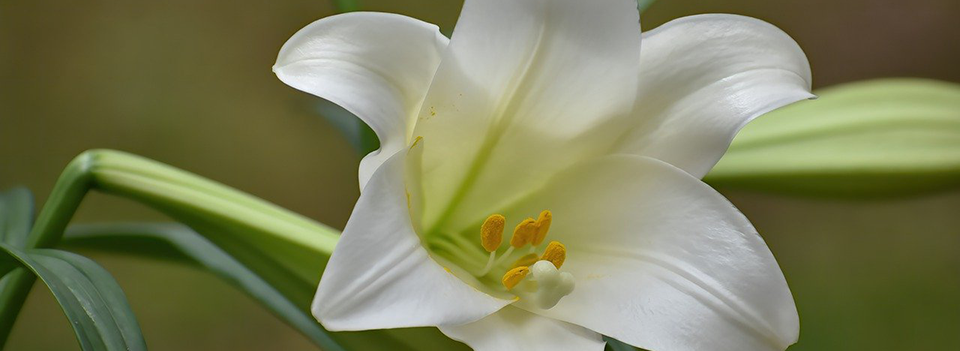
With proper care, Easter lilies can bloom outdoors for months to come.
April 2, 2026
K-State Extension news service
MANHATTAN, Kan. — Easter lilies, a traditional holiday symbol of hope and purity, may not yet be done for the year.
Kansas State University horticulture expert Matt McKernan said that although not all varieties of Easter lilies are reliably hardy in Kansas, a few simple steps can give them a chance to survive outdoors.
Those include:
- After the flowers have faded, remove the flower stalk so that the plant’s energy does not go toward making seed.
- Keep the plant inside until the danger of frost is past. Keep soil moist but never waterlogged. Don't allow water to sit in the tray.
- The pot can be moved outside when frost is no longer a concern. Gradually acclimate lilies to outdoor conditions over one to two weeks.
- After the plant is acclimated outdoors, choose a sunny, well-drained spot for planting. Good drainage is vital for lilies. Incorporate organic matter, such as compost, into the soil during planting to improve drainage and water holding capacity.
- Plant the bulbs six inches deep and 12 to 18 inches apart. Spread the roots out in the hole during planting. Cover with soil and water well. Plant Easter lilies in groups of at least three for the best garden display.
- Provide good moisture year-round. Apply three inches of mulch around plants to conserve moisture and help keep roots cool. Plants may need to be staked to support their height, especially when grown in windy locations or under too much shade.
- Plants may continue to grow for the remainder of the summer, but often after transplanting the top growth dies off before fall. New growth may appear later in the summer, or the plant may stay dormant until the following spring. Either is acceptable.
- Cover the plants in the fall after the foliage has died down with straw, pine needles, wood chips or other types of mulch to help protect the plant over winter. Use four inches of straw or three inches of any of the other materials.
- Uncover the plants in the spring to allow new growth to appear, and fertilize from when growth appears until blooms begin and according to results of a soil test.
When grown outdoors, Easter lilies will look much different than the potted holiday plant. Lilies will often grow up to 3 feet tall and will not bloom until later in the summer months. “Despite these differences Easter lilies, Oriental lilies, and other Asiatic lilies can be a great addition to the landscape” McKernan added.
McKernan and his colleagues in K-State’s Department of Horticulture and Natural Resources produce a weekly Horticulture Newsletter with tips for maintaining home landscapes and gardens.
Interested persons can subscribe to the newsletter, as well as send their garden and yard-related questions to hortsupport@ksu.edu, or contact your local K-State Extension office.
***

K‑State Extension is a short name for the Kansas State University Cooperative Extension Service, a program designed to generate and distribute useful knowledge for the wellbeing of Kansans. Supported by county, state, federal and private funds, the program has county extension offices statewide. Its headquarters is on the K‑State campus in Manhattan. For more information, visit www.ksre.ksu.edu. K-State Extension is an equal opportunity provider and employer.