Ladybug populations are abundant across Kansas this spring
Warm temperatures and abundant prey are driving increased sightings of beneficial insects in gardens and landscapes statewide
At a glance: K-State horticulture entomologist Raymond Cloyd said that people will be seeing a greater abundance of ladybugs this year.
More information: Raymond Cloyd, rcloyd@ksu.edu
Related: K-State Horticulture Newsletter
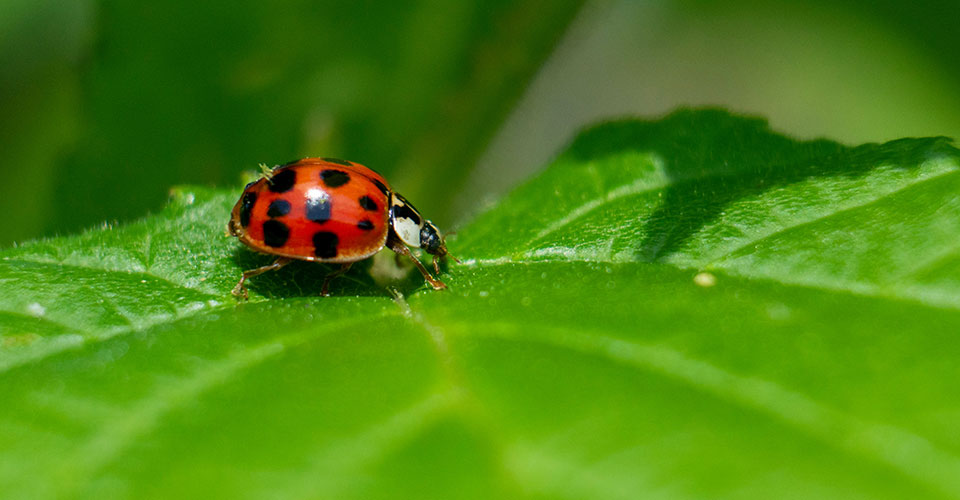
K-State Extension entomologist Raymond Cloyd says that greater populations of ladybugs do not pose a problem to gardens and landscapes.
April 30, 2026
By Colton Tripp, K-State Extension news service
MANHATTAN, Kan. — Step outside on a typical spring day in Kansas, and chances are flowers are blooming, birds are chirping and rain showers are passing through. But this year, another sight is prevalent across the landscape: Ladybugs, appearing in abundance.
From gardens to backyards, these familiar insects, also known as ladybird beetles, have appeared in large numbers throughout the state. While the surge may seem unusual, experts say it is largely driven by favorable weather conditions and an abundance of food.
“The excessive number of ladybird beetles is not an uncommon phenomenon,” said Raymond Cloyd, Kansas State University Extension expert in horticulture entomology.
Ladybug populations are closely associated with environmental conditions, particularly temperature, moisture and the availability of prey, such as aphids. Mild winter weather followed by warm spring temperatures may have allowed populations to emerge earlier and more quickly during this growing season.
In most cases, large numbers of ladybugs are a positive sign for gardeners. Both larvae and adults are generalist predators feeding on soft-bodied insect pests, such as aphids and whiteflies, which will help to maintain insect pest populations below plant damaging levels.
“Populations will remain high as long as their food source is present,” Cloyd said. “If their food source declines, then ladybird beetle adults will move on."
“Ladybug adults are capable of consuming up to 5,000 aphids during their lifespan,” Cloyd said.
However, high populations can become a nuisance in some situations. As food sources decline, ladybugs may move into new areas, including homes, barns or other structures, in search of shelter or additional food.
“Ladybug numbers will decrease when populations of aphids or other soft bodied insect pests decline in numbers or become scarce, or if insecticides are applied that kill insect pests that ladybugs use as a food source,” Cloyd said.
Additionally, not all ladybugs are native species.
“The multicolored Asian lady beetle, which is present in Kansas, can invade homes in large numbers in the fall and become a nuisance pest,” Cloyd said.
For most Kansans, however, ladybugs are not a concern. These insects do not pose a threat to people, pets or plants and are beneficial insects in landscapes and gardens because they feed on insect pests.
As spring progresses, populations may naturally decline as food sources become less available and ladybugs disperse to other locations. In the meantime, extension experts encourage people to view their abundance as a sign of a healthy ecosystem; thus, experiencing the value of ladybugs as beneficial insects across Kansas landscapes.
More information on ladybugs is available online from the K-State Horticulture Newsletter, or from local K-State Extension offices in Kansas.
***

K‑State Extension is a short name for the Kansas State University Cooperative Extension Service, a program designed to generate and distribute useful knowledge for the wellbeing of Kansans. Supported by county, state, federal and private funds, the program has county extension offices statewide. Its headquarters is on the K‑State campus in Manhattan. For more information, visit www.ksre.ksu.edu. K-State Extension is an equal opportunity provider and employer.