Kansas beef takes center stage during grilling season
K-State meat scientist Erin Beyer says warmer weather brings increased demand for steaks, grilling and outdoor cooking
At a glance: K-State meat scientist Erin Beyer gives helpful tips for cooking on the grill during the summer months.
More information: Erin Beyer, erbeyer@ksu.edu
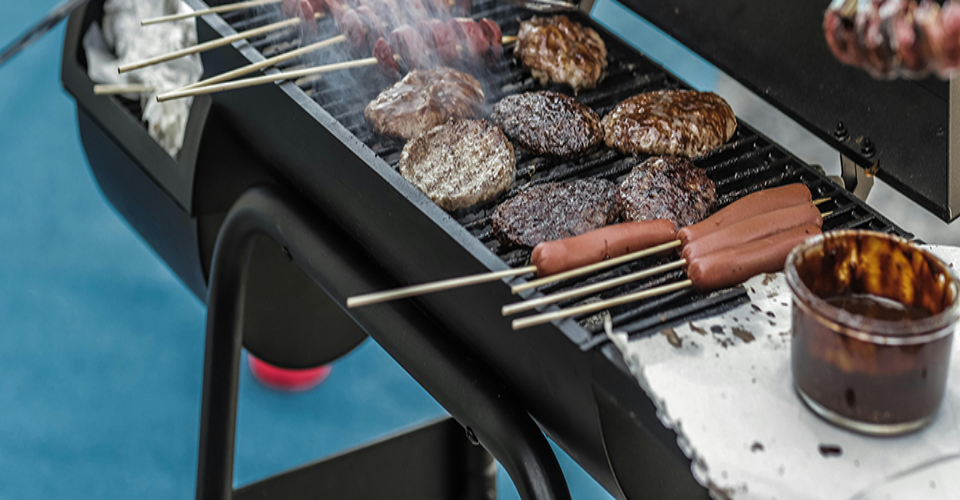
K-State meat scientist Erin Beyer said consumers should take beef cuts off the grill 15 degrees before reaching desired cooking temperature.
May 20, 2026
By Colton Tripp, K-State Extension news service
MANHATTAN, Kan. – Consider this: The sizzle of steak hitting the grill may be one of the most recognizable sounds of summer, and for Kansas beef producers, it also signals one of the busiest times of the year.
From backyard grills to barbecue smokers, warmer temperatures and summer gatherings traditionally drive increased beef sales beginning around Memorial Day.
“(Generally, there are) two different seasons; grilling season and non-grilling season,” said Erin Beyer, a Kansas State University Extension meat science expert.
Beyer said grilling season typically begins around Memorial Day and continues through Labor Day as consumers spend more time cooking outdoors.
“Beef sales really increase starting at Memorial Day, and that is due to cooking outside,” she said.
Kansas producers play a major role in meeting that seasonal demand.
“The beef producers in this state contribute massively to the overall economy,” Beyer said.
According to Beyer, Kansas is home to more than 26,000 beef producers, contributing more than $11 billion in economic impact.
While such traditional cuts as ribeye and strip steaks remain popular during grilling season, Beyer encourages consumers to explore other options on the beef carcass.
“Maybe this month, challenge yourself to get out there and try a new cut of beef that maybe you haven’t tried before,” she said.
Cuts such as the culotte, also known as picanha, flat iron and Denver steak can provide flavorful and often more economical grilling options.
Grilling Safety
As outdoor cooking increases, Beyer said food safety should remain the top priority.
“My number one tip always is to use a food thermometer,” Beyer said.
For whole muscle beef cuts, USDA recommends cooking to an internal temperature of 145 degrees Fahrenheit, which corresponds to a medium-rare degree of doneness.
Beyer also emphasized preventing cross-contamination during food preparation.
“Minimizing cross-contamination, washing hands and thermometer usage are my top tips for keeping everyone safe this summer,” she said.
Cooking Quality
For consumers aiming to improve steak quality on the grill, Beyer said proper cooking techniques can make a significant difference.
“The next most important decision you can make is how you cook it,” she said.
Beyer recommends removing steaks from the grill slightly before the desired final temperature, as internal temperatures can continue rising to 15 degrees after cooking.
“If you are going for that medium-rare degree of doneness, you’re not pulling it from the grill at 145; (rather) you need to pull it around 120 degrees,” she said.
Beyer also encourages consumers to understand the difference between grilling and barbecuing, noting the two methods to use very different cooking styles.
“Low and slow is barbecue,” she said. “Grilling is going to be that direct heat source right underneath that meat product, and it cooks very quickly.”
More information on grilling safety is available through local K-State Extension offices.
***

K‑State Extension is a short name for the Kansas State University Cooperative Extension Service, a program designed to generate and distribute useful knowledge for the wellbeing of Kansans. Supported by county, state, federal and private funds, the program has county extension offices statewide. Its headquarters is on the K‑State campus in Manhattan. For more information, visit www.ksre.ksu.edu. K-State Extension is an equal opportunity provider and employer.