Feeding the Microbiome: Simple steps to improve gut health
K-State nutrition expert says fiber-rich foods, balanced habits can support the body’s complex gut ecosystem
At a glance: The gut microbiome plays a critical role in overall human health. K-State nutrition expert Chelsea King said it produces essential nutrients such as short-chain fatty acids, vitamins and amino acids — compounds that serve as building blocks for the body’s cells.
More information: Chelsea King, Chelsea.king@jocogov.org
Related: Sound Living
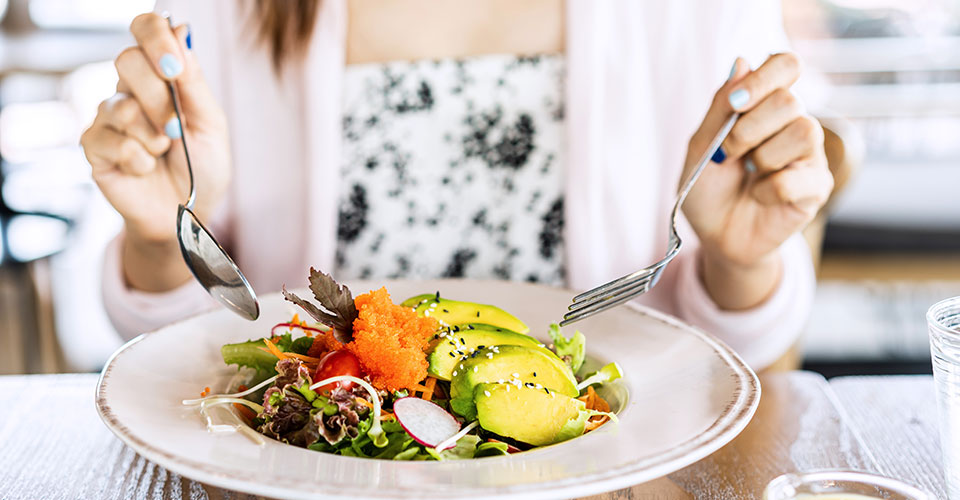
K-State nutrition expert Chelsea King says it is true that you are what you eat. Healthy foods support a healthy gut microbiome that leads to many positive benefits for the human body.
May 11, 2026
By Pat Melgares, K-State Extension news service
MANHATTAN, Kan. – Chelsea King likens the human gut to a bed and breakfast for the good – and bad -- bacteria that live within us.
“You provide (bacteria) with food and a place to stay, and in turn, they take things that we can’t use for good health and turn it into beneficial components for us,” said King, a nutrition agent for K-State Extension’s office in Johnson County.
That internal ecosystem, known as the microbiome, plays a critical role in overall health. King said it produces essential nutrients such as short-chain fatty acids, vitamins and amino acids — compounds that serve as building blocks for the body’s cells.
Listen to an interview by Jeff Wichman with Chelsea King on the weekly radio program, Sound Living, produced by K-State Extension
The gut also communicates with the brain through what scientists call the gut-brain axis, a two-way system linked in part by the vagus nerve, the long cranial nerve that connects the brain to vital organs.
“I like to reference when people talk about their gut intuition or that gut feeling,” King said. “It’s a true thing, because your brain and your gut are connected.”
Maintaining a healthy gut, however, depends on a wide range of factors that begin early in life. King said the method of delivery at birth can influence the types of microorganisms that populate the gut. Babies born vaginally tend to have different microbiome compositions than those delivered by cesarean section. Feeding practices also matter.
“Breast milk has some healthy prebiotics in it,” King said, noting that breastfed infants develop different microbial communities than those who are formula-fed.
As people age, additional factors come into play, including diet, stress, medications, genetics and environment. Antibiotics, while essential for treating bacterial infections, can disrupt gut balance by killing beneficial bacteria along with harmful ones.
Diet remains one of the most influential and controllable factors. King said most Americans fall short on dietary fiber, consuming just 10 to 15 grams per day — well below the recommended 25 grams for women and 31 grams for men.
“We want to make sure that we are picking foods that are high in fiber,” she said. “Those nutrients for our gut health are going to be that indigestible fiber.”
High-fiber foods include avocados, beans, chia seeds and whole grains such as pearl barley. For example, one cup of avocado or one ounce of chia seeds can provide about 10 grams of fiber, helping close the gap toward daily recommendations.
Fiber also acts as a prebiotic — essentially food for beneficial gut bacteria. Prebiotics are found in foods such as whole grains, fruits, vegetables, nuts and seeds, as well as resistant starches. King said resistant starch forms when foods like rice, pasta or oats are cooked and then cooled, altering their structure to make them less digestible and more beneficial to gut microbes.
Probiotics, which are live microorganisms, can also support gut health, though King cautioned that more research is needed. Probiotics are commonly found in fermented foods such as sourdough bread, kimchi and refrigerated pickles, and can also be purchased over the counter as supplements.
“Research shows that probiotics may help support a healthy immune function and balance microorganisms,” she said. “But the supplement forms are not regulated, so it’s important to be an informed consumer.”
King advises consulting a health care provider before taking probiotic supplements, and looking for products that are third-party tested.
Beyond diet, lifestyle habits also influence gut health. Regular physical activity can aid digestion and nutrient absorption. Even a short walk after meals can be beneficial. Adequate sleep — seven to nine hours for adults — is also linked to a balanced microbiome.
Stress management is another key component, as chronic stress can negatively affect gut bacteria and contribute to inflammation.
“We know that eating a healthy, rounded diet actually helps to keep the gut healthy,” King said. “A diet heavy in sugar and highly processed foods can be detrimental.”
She added that excess sugar and artificial sweeteners may promote inflammation and disrupt microbial balance, potentially worsening existing health conditions.
Ultimately, King said supporting gut health comes down to consistent, balanced habits.
“It is true, you are what you eat,” she said. “What you feed your body impacts your physical health, your mental health and your gut health.”
***

K‑State Extension is a short name for the Kansas State University Cooperative Extension Service, a program designed to generate and distribute useful knowledge for the wellbeing of Kansans. Supported by county, state, federal and private funds, the program has county extension offices statewide. Its headquarters is on the K‑State campus in Manhattan. For more information, visit www.ksre.ksu.edu. K-State Extension is an equal opportunity provider and employer.