Gardeners enter home stretch for onions, tomatoes
K-State horticulture expert shares tips for successfully growing two garden staples
At a glance: This is the time of year that onions grow and develop rapidly, says K-State horticulture expert Matt McKernan. Tomatoes aren't far behind.
More information: Matt McKernan, hortsupport@ksu.edu
Related: K-State Horticulture Newsletter
K-State Extension news service
MANHATTAN, Kan. — If gardeners are crying about their onions right now, it’s not because they’re slicing them in their kitchen. But they may soon.
“This is the time of year that onions grow and develop rapidly,” said Kansas State University horticulture expert Matt McKernan. “Regular watering – if the soil is dry – and light fertilization help maximize growth.”
In soils that tend to be alkaline, McKernan suggests using ammonium sulfate (21-0-0) at the rate of ½ cup per 10 row-feet. The number series refers to the rates of nitrogen, phosphorus and potassium contained in the fertilizer.
“You can use lawn fertilizer (such as 29-5-5, 27-3-3, or similar) but only use 1/3 cup per 10 row-feet,” he said. “Make sure the lawn fertilizer does not have a weed preventer or weed killer included. Sprinkle the fertilizer 2-3 inches alongside the row and water in. Do not fertilize after the onions start to bulb.”
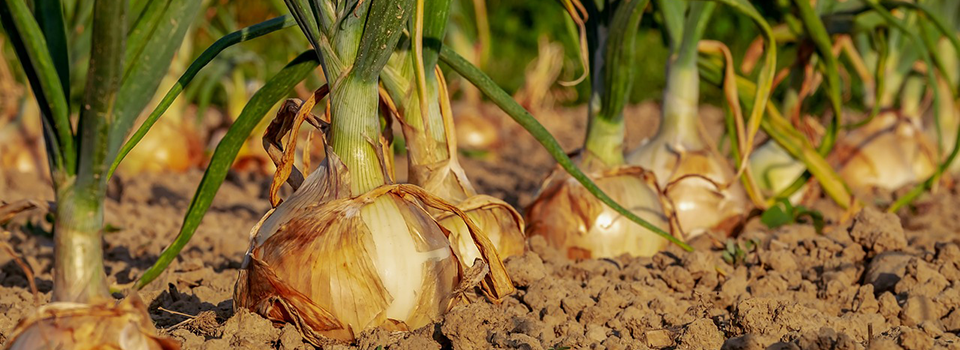
McKernan said that as onions develop, as much as 2/3 of the bulb remains out of the soil. He said that is normal and there is no need to cover the bulb with soil.
Tomatoes
Another garden favorite – tomatoes – could benefit from mulching as long as soils are warm enough and not saturated with water, according to McKernan.
“Tomatoes prefer even levels of soil moisture, and mulches provide that by regulating soil temperatures and preventing excessive evaporation,” he said.
Mulch also helps to suppress weeds, reduce disease problems, and prevent the formation of hard crust on the soil. Crusted soils restrict air movement and slow the water infiltration rate.
McKernan said hay and straw mulches are “very popular for tomatoes, but may contain weed or volunteer grain seeds.” Grass clippings can be used as mulch, but should be applied in a thin layer – “only 2-3 inches thick,” McKernan said.
“Do not use clippings from lawns that have been treated with weed killer until some time has passed,” he said. “With most types of weed killers, clippings from the fourth mowing after treatment may be used.”
McKernan and his colleagues in K-State’s Department of Horticulture and Natural Resources produce a weekly Horticulture Newsletter with tips for maintaining home landscapes and gardens.
Interested persons can subscribe to the newsletter, as well as send their garden and yard-related questions to hortsupport@ksu.edu, or contact your local K-State Extension office.
***

K-State Extension is a short name for the Kansas State University Cooperative Extension Service, a program that generates and distributes useful knowledge to support the well-being of Kansans. Supported by county, state, federal and private funds, the program has county extension offices statewide. Its headquarters is on the K‑State campus in Manhattan. For more information, visit www.ksre.ksu.edu. K-State Extension is an equal opportunity provider and employer.