Cattle Chat: Building better cows
K-State beef cattle experts discuss how genetics, health and management decisions shape a heifer's lifetime productivity
At a glance: K-State Beef Cattle Institute experts and guest, veterinarian Lee Jones, discuss how to set up heifers to become better cows
More information:
Brad White, bwhite@ksu.edu, 785-532-4243
Lee Jones, lee.jones@boehringer-ingelheim.com
Related: K-State Beef Cattle Institute Cattle Chat podcast
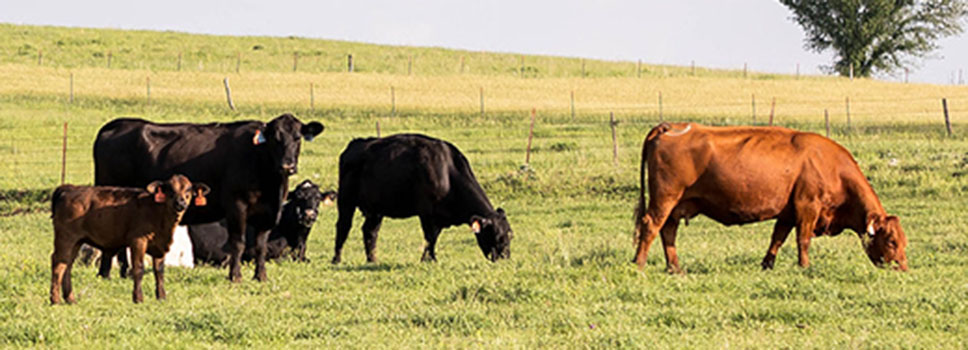
Beef cattle experts say building a strong cow base starts with proper management practices early in the heifers life.
June 9, 2026
By Chevy-Lynn Vaske, K-State Extension news service
MANHATTAN, Kan. – Building a productive cow herd does not begin when a heifer is bred for the first time.
According to experts on Kansas State University's Beef Cattle Institute Cattle Chat podcast, the foundation for long-term success is established much earlier through genetics, health management and nutrition decisions made from the first days of life.
On a recent episode of Cattle Chat, K-State experts were joined by veterinarian Lee Jones to discuss strategies for developing replacement heifers that remain productive and profitable throughout their lives. The conversation focused on defining herd goals, protecting animal health and ensuring heifers reach key reproductive milestones.
"If we want productive cows five or six years from now, we have to start making those decisions when those heifers are young," Jones said. "Every management decision builds on the next one."
The experts emphasized that successful heifer development begins with selecting genetics that fit the operation's goals. Whether producers prioritize maternal traits, growth performance or longevity, understanding those objectives can help guide replacement heifer selection and future breeding decisions.
They also emphasized that health management plays a significant role in setting heifers up for success.
"One-size-fits-all health programs rarely fit every operation," Jones said. "The most effective plans are designed around the specific risks and management practices of that herd."
The experts noted that heifers must receive adequate nutrition throughout development to support growth while also reaching puberty early enough to be successfully bred.
"The goal is not just getting a heifer bred," Jones said. "The goal is developing a female that breeds early, calves successfully and stays in the herd for years."
The conversation also explored whether heifers should calve for the first time at 24 or 30 months of age. While calving at 24 months is common and can improve economic efficiency, the beef cattle experts noted that each operation must evaluate its available resources, labor and management capabilities before deciding which approach best fits their system.
Ultimately, the experts agreed that developing replacement heifers requires a long-term mindset.
"Good cows do not happen by accident," Jones said. "They are the result of intentional planning, consistent management and making decisions today that will pay off for years to come."
The full discussion is available on the Beef Cattle Institute's Cattle Chat podcast. For additional questions, send email to bci@ksu.edu.
***

K‑State Extension is a short name for the Kansas State University Cooperative Extension Service, a program designed to generate and distribute useful knowledge for the wellbeing of Kansans. Supported by county, state, federal and private funds, the program has county extension offices statewide. Its headquarters is on the K‑State campus in Manhattan. For more information, visit www.ksre.ksu.edu. K-State Extension is an equal opportunity provider and employer.