Making jelly? The pectin you use makes a difference
K-State food scientist says acid content may determine whether product gels properly
At a glance: The type of pectin used -- liquid or dry -- makes a difference when making jam or jelly. K-State food scientist Karen Blakeslee explains the differences.
More information: Karen Blakeslee, 785-532-1673, kblakesl@ksu.edu
Related: K-State Rapid Response Center | Remaking Soft Jellies | You Asked It! food safety newsletter
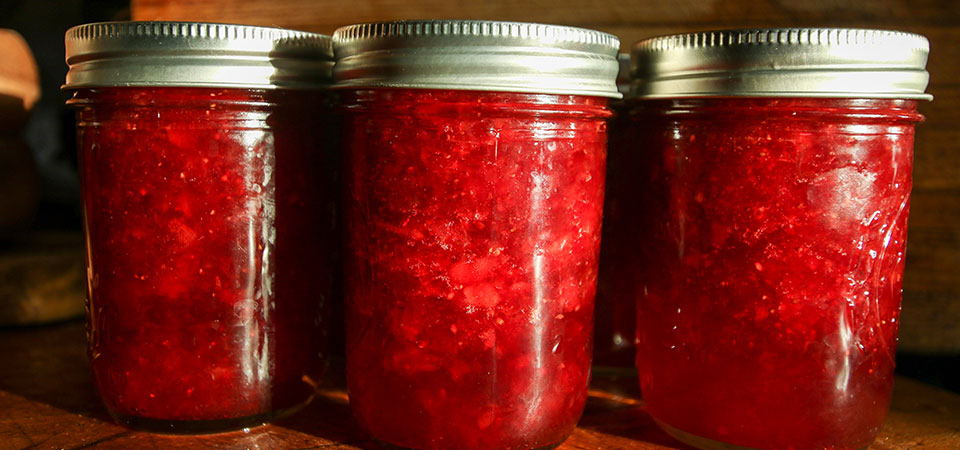
Jam and jelly recipes usually tell you which type of pectin to use, says K-State food scientist Karen Blakeslee.
June 19, 2026
K-State Extension news service
MANHATTAN, Kan. – Experienced jelly-makers will tell you one enduring fact: All pectin is not created equal.
There are two types of pectin, liquid and dry. Which one to use depends on the recipe you’re following, says Kansas State University food scientist Karen Blakeslee.
“Jam and jelly recipes will tell you which pectin to use,” said Blakeslee, who is coordinator of K-State’s Rapid Response Center for Food Science. “Both have equal success when ingredients are measured properly and you follow the recipe’s instructions.”
Pectins are a group of pectic polysaccharides, or long-chain carbohydrate molecules, and are key to helping jams and jellies to gel. Blakeslee said some fruits do not need added pectin, while others do. Liquid and dry pectin are not interchangeable in recipes.
“Dry pectin is usually made from citrus fruit; liquid pectin is made from apples,” Blakeslee said. “Those products have different natural pH values, or acid content.”
Citrus has a natural pH value of 2-3. Apples have a natural pH of 3-4.
“Pectin also has other types of acid added,” Blakeslee said. “So this can affect the gelling properties of the jam or jelly if the balance between the acid, sugar, fruit and pectin is incorrect. Some recipes recommend adding extra lemon juice to help balance the mixture and improve gelling properties.”
Before using pectin to make jam or jelly, “pay attention to the (use-by) date on the package for best results,” Blakeslee said. “Old pectin can cause weak gel formation, resulting in a syrupy product. Powdered pectin can be stored in the freezer to extend its shelf life.”
To make jam or jelly with low- or no-sugar, Blakeslee urges home cooks to be sure to use the pectin and recipes designated for those products. This pectin is formulated to create a gel with a lower amount of sugar. Some artificial sweeteners, such as sucralose, can be used with this type of pectin. Do not lower the sugar content when using regular commercial pectin.
If jam or jelly doesn’t gel properly after canning, Blakeslee said it is still possible to re-make the product, depending on the type of pectin used. More information on doing this is available online from the National Center for Home Preservation.
But if the product still won’t gel, Blakeslee says, all is not lost: “Simply use it as a syrup for pancakes, waffles or ice cream,” she said.
“If a jam or jelly turns out stiff, it cannot be remade. But it could be warmed up and used as a fruit syrup topping or a meat glaze. Learn more from the National Center for Home Food Preservation.”
Blakeslee publishes a monthly newsletter called You Asked It! that provides numerous tips on being safe and healthy. More information is also available from local extension offices in Kansas.
***

K‑State Extension is a short name for the Kansas State University Cooperative Extension Service, a program designed to generate and distribute useful knowledge for the wellbeing of Kansans. Supported by county, state, federal and private funds, the program has county extension offices statewide. Its headquarters is on the K‑State campus in Manhattan. For more information, visit www.ksre.ksu.edu. K-State Extension is an equal opportunity provider and employer.