Keep canning to fresh foods, not leftovers, says K-State food scientist
Blakeslee says there are no safe methods for canning leftovers
At a glance: Time-tested methods associated with canning fresh foods are not appropriate for leftovers or previously canned foods, says Kansas State University food scientist Karen Blakeslee.
More information: Karen Blakeslee, 785-532-1673, kblakesl@ksu.edu
Related: Safe Food Storage: The Refrigerator and Freezer | National Center for Home Food Preservation | You Asked It! food safety newsletter
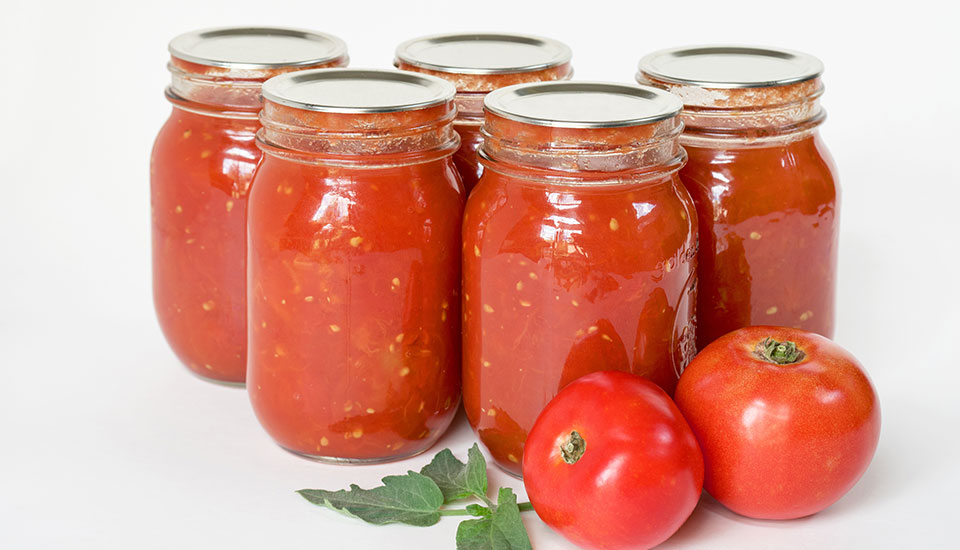
Scientifically proven canning methods are best for fresh foods, and are not considered safe for previously canned or leftover foods.
June 2, 2026
By Pat Melgares, K-State Extension news service
MANHATTAN, Kan. – Canned foods are tradition-rich in many Midwest homes, where families have enjoyed the benefits of preserving fresh, often home-grown foods in airtight containers.
But the time-tested methods associated with canning fresh foods are not appropriate for leftovers or previously canned foods, said Kansas State University food scientist Karen Blakeslee.
“It may be tempting to can leftovers or already canned foods,” she said, “but it can be a food safety risk.”
For starters, Blakeslee notes that canning recipes and recommendations are based on fresh food that is prepared in a specific manner. “There is also the expense of jars, lids, time and energy to consider that adds up and is not very cost efficient,” she said.
Leftover food that is mishandled or temperature abused increases the food safety risks if bacteria are growing, according to Blakeslee. The canning process may not be adequate to kill bacteria.
“When recipes are developed, there are many safety factors involved, including the pH level, water activity, size of the food pieces, size of the jar, how the heat moves through the jar and food, the heat up and cool down time during processing, and much more,” Blakeslee said.
“Previously canned food or leftovers have a softer texture, which leads to a more dense product. Because of the variability of these foods, there are no standard recommendations to safely can these foods. It is not just about the lid sealing to the jar.”
The National Center for Home Food Preservation also reports that there are no safe, tested processes to can leftovers or foods that were previously canned. A default method – though not recommended – is to process the food for the full time and temperature as if starting from scratch.
“When you consider you are not saving money or resources, it does not seem worth the loss of food quality to practice this re-canning of commercially canned food,” Blakeslee said.
Freezing food is a better option, she said.
“Freezing is easy, less time-consuming and more economical,” said Blakeslee, adding that consumers should use freezer-safe containers for best results.
Food-safe options for freezing include:
- Wide-mouth canning jars.
- Sturdy plastic containers or re-closable plastic bags designated for freezing.
Not all types of plastic containers are made to withstand freezing temperatures. Also, how long food can be stored in the freezer varies by type of food. A guide to storage time is available online from the K-State Extension bookstore, Safe Food Storage: The Refrigerator and Freezer.
More food safety tips are available online from K-State’s Rapid Response Center for Food Science. Blakeslee publishes a monthly newsletter, called You Asked It!, with timely tips for safe food in and out of the home.
More information is also available at local extension offices in Kansas.
***

K‑State Extension is a short name for the Kansas State University Cooperative Extension Service, a program designed to generate and distribute useful knowledge for the wellbeing of Kansans. Supported by county, state, federal and private funds, the program has county extension offices statewide. Its headquarters is on the K‑State campus in Manhattan. For more information, visit www.ksre.ksu.edu. K-State Extension is an equal opportunity provider and employer.