Gardening also provides food safety lesson for children, says K-State expert
Food scientist outlines important steps in keeping garden goodies safe
At a glance: Summer gardening offers children a chance to learn where their food comes from, but a Kansas State University food scientist says it also provides an important opportunity to teach food safety.
More information: Karen Blakeslee, 785-532-1673, kblakesl@ksu.edu
Related: Rapid Response Center for Food Science | Partnership for Food Safety Education | You Asked It! (food safety newsletter)
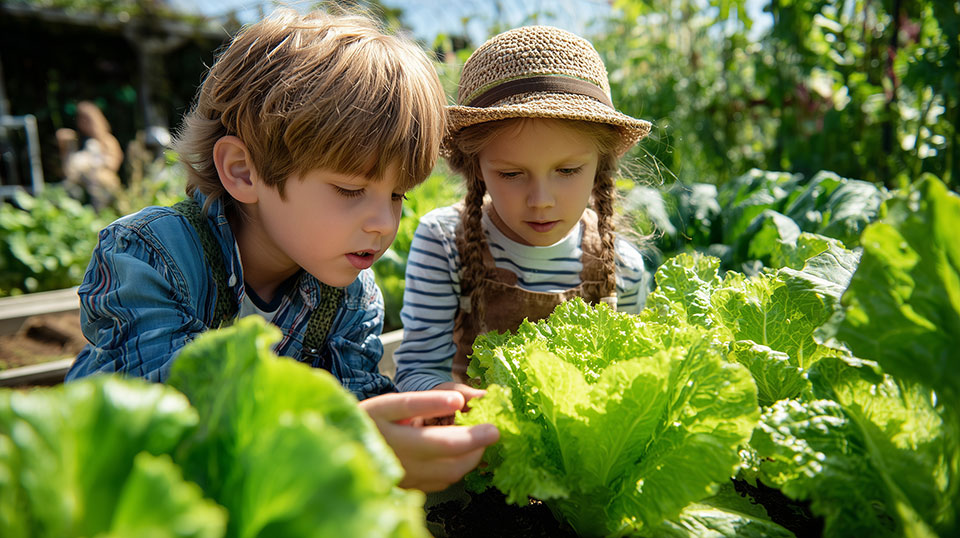
Children can learn a lot about food safety as well as gardening when growing their own foods.
June 8, 20256
By Pat Melgares, K-State Extension news service
MANHATTAN, Kan. — Summer gardening offers children a chance to learn where their food comes from, but a Kansas State University food scientist says it also provides an important opportunity to teach food safety.
Karen Blakeslee, coordinator of K-State’s Rapid Response Center for Food Science, said young gardeners often become excited about growing fruits and vegetables but may not realize the importance of handling produce safely before eating it.
Citing an online gardening toolkit available from the Partnership for Food Safety Education, Blakeslee said the timing is ideal to highlight food safety practices because many children are out of school and spending more time outdoors, including in gardens at home, in communities and at schools.
“One of the reasons for this toolkit is to encourage kids to try new foods, especially ones they grow in their garden,” Blakeslee said. “But handling the garden produce safely is just as important.”
The Garden Food Safety Toolkit is a hands-on educational resource designed to help young gardeners learn proper harvesting, handling and preparation techniques for fruits and vegetables.
She said the toolkit is intended primarily for students in grades three through five, though modifications can be made for younger and older children. The curriculum includes activities and lessons designed to make food safety concepts easier for children to understand.
According to Blakeslee, fresh produce remains a leading source of foodborne illness in the United States. She cited a Centers for Disease Control and Prevention study that analyzed a decade of foodborne illness outbreaks and found leafy vegetables were the most common source.
“Because fruits and vegetables are often eaten raw, it’s especially important for young gardeners to learn how to handle them safely,” Blakeslee said.
She added that many children become focused on the excitement of gardening and harvesting crops without thinking about the risks associated with improper food handling.
“I’m guessing that kids don’t often think of food safety first — favoring such things as growing cool stuff,” Blakeslee said when asked about the challenge of reaching young gardeners.
Her advice begins with one simple step: rinse produce before eating it, even when it comes directly from the garden.
“While it is tempting to eat produce right off the plant, it is best to rinse it with water first,” Blakeslee said. “Be sure the water for the garden is potable, or safe to consume. This is also important when preparing the produce to eat.”
She also emphasized proper handwashing during both harvesting and food preparation.
“Always wash your hands,” Blakeslee said. “This is important when harvesting produce and when preparing the produce to eat.”
Blakeslee said gardeners also should inspect fruits and vegetables carefully before consuming them.
“When harvesting, examine the produce for any insect damage, mold, decay or rot and (if found), the product should not be consumed,” she said.
In addition, she encourages gardeners to keep produce clean by using sanitized equipment.
“Use clean tools and containers to keep produce as clean as possible,” Blakeslee said.
Blakeslee said teaching children these habits early can help reduce the risk of illness while encouraging healthy eating habits that may last a lifetime.
More food safety tips are available online from K-State’s Rapid Response Center for Food Science. Blakeslee publishes a monthly newsletter, called You Asked It!, with timely tips for safe food in and out of the home.
More information is also available at local extension offices in Kansas.
***

K‑State Extension is a short name for the Kansas State University Cooperative Extension Service, a program designed to generate and distribute useful knowledge for the wellbeing of Kansans. Supported by county, state, federal and private funds, the program has county extension offices statewide. Its headquarters is on the K‑State campus in Manhattan. For more information, visit www.ksre.ksu.edu. K-State Extension is an equal opportunity provider and employer.