Deadheading gives plants new life
K-State horticulture expert lists plants that benefit from a little pinching
At a glance: Pinching off spent flowers -- a process called deadheading -- helps some plants bloom more profusely, says K-State horticulture expert Matt McKernan.
More information: Matt McKernan, hortsupport@ksu.edu
Related: K-State Horticulture Newsletter
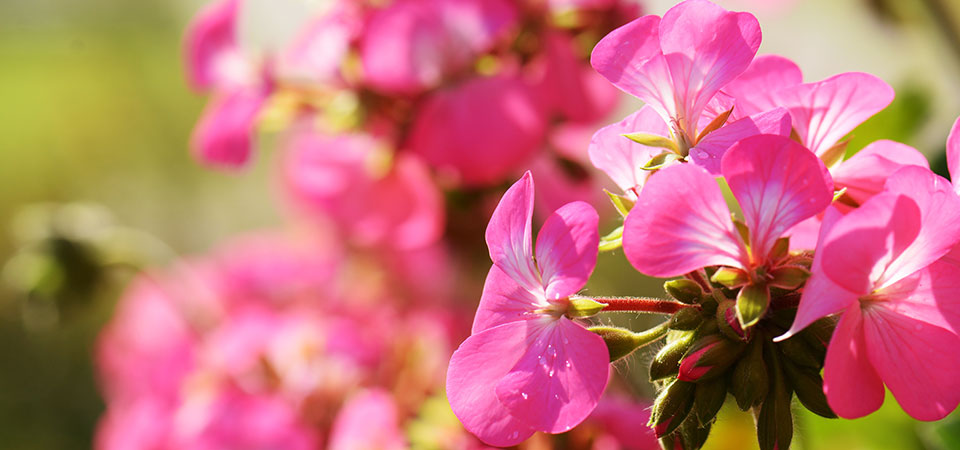
Geraniums and other summer favorites often benefit when old, spent flowers are removed -- a process called deadheading.
June 25, 2026
K-State Extension news service
MANHATTAN, Kan. -- It may feel a bit gloomy to pick off fading flowers from the yard’s plants.
But Kansas State University horticulture expert Matt McKernan said you’re actually setting plants up for success by pinching off spent flowers, a process called deadheading.
“Some plants will bloom more profusely if the old, spent flowers are removed,” McKernan said.
“Annuals, especially, focus their energy on seed production to ensure that the species survives. If you remove the old flowers, the energy used to produce seed is now available to produce more flowers.”
Normally, gardeners can deadhead flowers by simply pinching them off with a thumb and finger, but some tougher stems may require scissors or pruning shears.
McKernan said some perennials also benefit from deadheading, which essentially extends the blooming season by encouraging an additional burst of flowers. But in the case of perennials, he said: “Some gardeners actually enjoy the look of spent flowers, such as sedum or purple coneflower. And the seed produced can be a good food source for birds.”
Some of the plants that increase blooms in response to deadheading include:
- Hardy geraniums.
- Coreopsis.
- Marigolds.
- Snapdragons.
- Bee Balm.
- Butterfly Bush.
- Roses.
- Campanulas.
- Blanket flowers.
- Rudbeckia
- Shasta daisy.
- Delphiniums.
- Zinnias.
- Tall Garden Phlox.
- Salvia.
- Scabiosa.
- Annual heliotrope.
- Geraniums (Pelargonium).
- Yarrow.
Other plants that do not need to be deadheaded include sedum (Autumn Joy), melampodium, impatiens, most flowering vines, lantana, vinca (Catharanthus), wishbone flower (Torenia) and some petunias.
“More and more a major trend in annual flower breeding is developing flowers that require little to no deadheading,” McKernan added. “Many begonias and petunias, for example, will reflower vigorously without deadheading. This helps minimize the time spent deadheading in the garden, but does not eliminate all of the benefits deadheading can provide.”
McKernan and his colleagues in K-State’s Department of Horticulture and Natural Resources produce a weekly Horticulture Newsletter with tips for maintaining home landscapes and gardens.
Interested persons can subscribe to the newsletter, as well as send their garden and yard-related questions to hortsupport@ksu.edu, or contact your local K-State Extension office.
***

K‑State Extension is a short name for the Kansas State University Cooperative Extension Service, a program designed to generate and distribute useful knowledge for the wellbeing of Kansans. Supported by county, state, federal and private funds, the program has county extension offices statewide. Its headquarters is on the K‑State campus in Manhattan. For more information, visit www.ksre.ksu.edu. K-State Extension is an equal opportunity provider and employer.