In the Garden: When tops fall over, it’s time to harvest onions
K-State horticulture expert says onions should be stored in a dry spot
At a glance: K-State horticulture expert Matt McKernan shares guidelines on harvesting onions, blackberries and strawberries.
More information: Matt McKernan, hortsupport@ksu.edu
Related: K-State Horticulture Newsletter
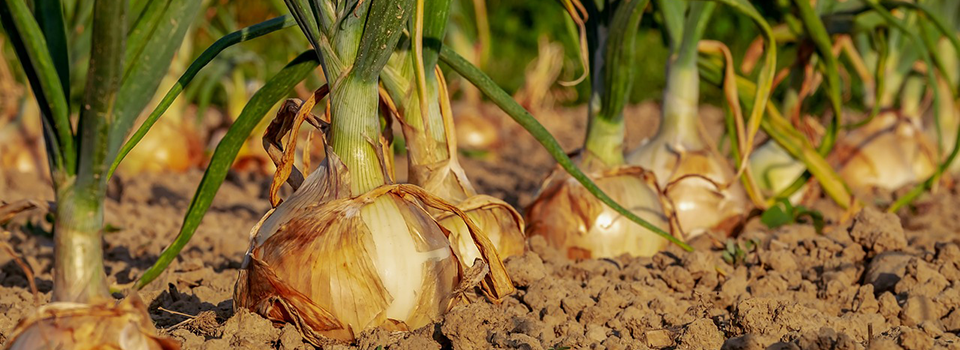
Onions can be pulled or dug up says K-State horticulture expert Cynthia Domenghini.
June 23, 2026
K-State Extension news service
MANHATTAN, Kan. – Kansas State University horticulture expert Matt McKernan says gardeners have no need to cry when looking for signs to harvest onions.
He said onions reach maturity when the tops begin to fall over; when at least one-half of the tops have fallen, it’s time to harvest.
“Onions can be pulled or dug up, leaving the tops intact,” McKernan said. “Hang the bunches, or spread them out, but ensure that they have good airflow and are out of direct sun in a warm location.”
McKernan noted that it can take 2-4 weeks for the tops and necks of onions to dry completely. Then, cut the tops and roots to one-half inch from the bulb, and store bulbs in a container that allows air to circulate, such as a loose basket, crate or mesh bag, at 32-40 degrees F with low humidity.
“If the temperature is too warm, the onions will sprout,” McKernan said. “If the room is too moist, roots will develop.”
More information on growing and harvesting onions is available in a publication from the K-State Extension bookstore.
Harvesting popular fruit
Blackberries and strawberries make the list of favorite fruits for many Kansas gardeners.
Blackberries should be harvested at peak maturity for best flavor. “They will not continue to ripen after harvest,” McKernan said, “so wait until the blue-black fruit has lost its shine, leaving a duller surface.”
Blackberries should be harvested on a dry day during the cool hours. When the fruit is removed, the receptacle (core) remains attached to the berry. Store freshly harvested blackberries in the refrigerator, unwashed. Blackberries should be harvested every 2-3 days depending on weather and the cultivar.
For more information, see the K-State Extension publication titled, Raspberries and Blackberries.
After harvesting fruit from June-bearing strawberries, the beds should be prepped for the next season. Strawberry plants will develop fruit buds in the fall, so renovating the beds now is important to avoid disturbing the plants later, according to McKernan.
Prepping June-bearing strawberry beds includes removing weeds, mowing the plants to 2 inches tall, cultivating the soil and applying fertilizer.
More information on growing strawberries is available in a publication also available from the K-State Extension bookstore.
McKernan and his colleagues in K-State’s Department of Horticulture and Natural Resources produce a weekly Horticulture Newsletter with tips for maintaining home landscapes and gardens.
Interested persons can subscribe to the newsletter, as well as send their garden and yard-related questions to hortsupport@ksu.edu, or contact your local K-State Extension office.
***

K‑State Extension is a short name for the Kansas State University Cooperative Extension Service, a program designed to generate and distribute useful knowledge for the wellbeing of Kansans. Supported by county, state, federal and private funds, the program has county extension offices statewide. Its headquarters is on the K‑State campus in Manhattan. For more information, visit www.ksre.ksu.edu. K-State Extension is an equal opportunity provider and employer.