Climate considerations for trees
K-State experts talk about weather-related changes and ways to best care for the trees
At a glance: Tracking weather data confirms that Kansas weather is continuing to change, which influences how animal and plant life adjust, said Kansas State University meteorologist Chip Redmond
More information:
Chip Redmond, 785-532-3029, christopherredmond@ksu.edu
Shad Hufnagel, 785-323-0100, smh8877@ksu.edu
Related: Kansas Forest Service
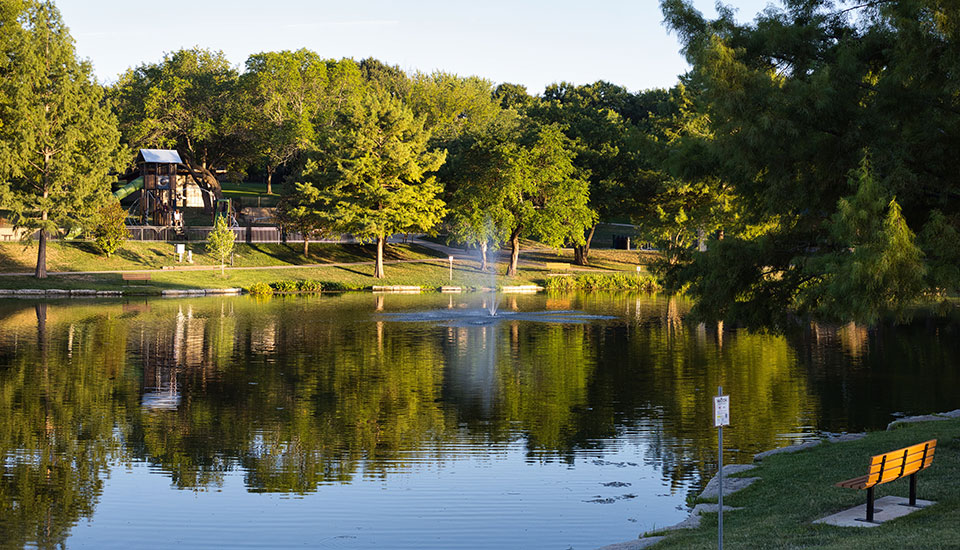
Weather data from the past 100 years indicates an increase in average temperatures, which impacts the plants and animals that can live in Kansas today.
July 6, 2026
K-State Extension news service
MANHATTAN, Kan. — Known as tornado alley, Kansas has a reputation for weather events. Tracking weather data confirms that Kansas weather is continuing to change, which influences how animal and plant life adjust, said Kansas State University meteorologist Chip Redmond.
Temperature shifts
“We’ve always lived in an evolving climate and there is a gradual transition where some things are going to phase out as we get warmer,” Redmond said.
Redmond said for the past century, meteorologists have been measuring temperature and precipitation. Some patterns have been observed.
“Over the last 100 years, the average overnight low temperatures have increased as much as half of a degree per decade,” Redmond said. “This atmosphere is holding more moisture and that influences how much the temperatures fall at night.”
He also said the warmer ground temperatures impact what plants and animals can live in Kansas today compared to past years.
“Old World Bluestem and other invasive species are able to thrive in areas that used to be harshly colder and we are even seeing armadillos’ habitat expanding in Kansas because their food availability is still there in the winter,” Redmond said.
Caring for the trees
Shad Hufnagel, the forest health coordinator for the Kansas Forest Service, said Kansas’ changing weather conditions play “a critical role in the health of trees.”
“We can’t control those (weather) variables, so it’s important that we focus on factors that we can manage or influence, like species and site selection, plant installation, tree maintenance and care,” Hufnagel said. “Proactive and intentional efforts in these areas can support tree health and provide a favorable environment in which trees can grow and thrive.”
He said pairing a tree with preferred site conditions is a good first step towards promoting healthy trees.
“This includes evaluating soil type and pH, tree hardiness, environmental exposure, availability of space, and other site conditions,” Hufnagel said. “Homeowners can submit soil samples to their local extension offices for analysis and to learn more about the soils in which they plan to plant. Trees are resilient and adaptable, but they perform best in well-suited environments.”
After selecting a good site, the tree should be handled and installed properly.
“While there are many fundamentals to follow when planting a tree, few are as important as planting depth,” Hufnagel said. “Any tree that is planted too deep, or too high for that matter, will be predisposed to health problems. Trees should be planted at a depth where the root flare is just visible above ground. This ensures that the roots are in the ground and the rest of the tree, including the entirety of the trunk, is above ground.”
All trees need adequate amounts of water to thrive and survive, especially during times of high heat and drought, Hufnagel said. Newly planted trees and those that are still being established will often need supplemental irrigation in addition to rainfall to ensure survival.
“Depending on the tree species, size, site conditions, and other factors, it can take several years for a tree to become established and primarily self-sustaining in the landscape. Even mature trees specimens can be impacted by weather-related stressors, like extreme or prolonged heat and drought, which can cause reduced tree health and vigor,” Hufnagel said.
Tree establishment and growth can be helped by reducing competing vegetation around the base of the tree and by properly installing mulch, which can aid in retaining moisture, buffering soil temperature, and controlling weeds.
“Mulch can also help safeguard trees from mechanical damage associated with mowing and other landscape care activities,” Hufnagel said.
Ongoing tree maintenance might also include structural pruning to promote a healthy and favorable growth habit or to remove dead, damaged, and diseased material. “When done properly, pruning can help increase a tree’s ability to withstand inclement weather and improve overall tree health,” Hufnagel said.
He added that the health and resiliency of a forest is most favorable when tree populations are comprised of many different tree species. Planting a variety of tree species not only helps mitigate the risks of damaging insects, pathogens and environmental stressors, but it also supports biodiversity and healthy ecosystems.
More information is available online from the Kansas Forest Service, as well as at local extension offices in Kansas.
***

K‑State Extension is a short name for the Kansas State University Cooperative Extension Service, a program designed to generate and distribute useful knowledge for the wellbeing of Kansans. Supported by county, state, federal and private funds, the program has county extension offices statewide. Its headquarters is on the K‑State campus in Manhattan. For more information, visit www.ksre.ksu.edu. K-State Extension is an equal opportunity provider and employer.