Tomato Cracking: Is it Preventable?
Choose different varieties to prevent common problem, says K-State expert
At a glance: K-State horticulture expert Matt McKernan says the common problem of tomatoes cracking can be solved by scheduling watering or choosing different varieties.
More information: Matt McKernan, hortsupport@ksu.edu
Related: K-State Horticulture Newsletter
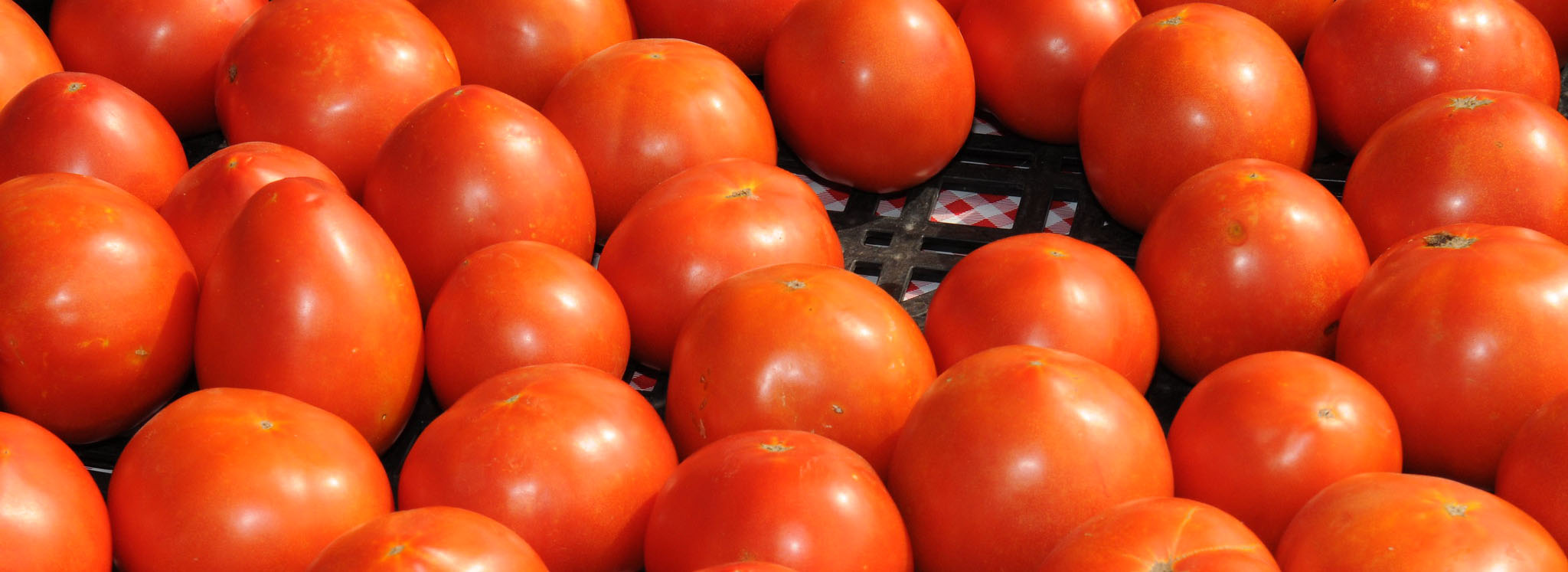
Tomato plants need approximately 1 inch of water per week, says K-State horticulture expert Matt McKernan.
July 23, 2026
K-State Extension news service
MANHATTAN, Kan. — Home gardeners often face the problem of tomato cracking, or hard cracks on the upper part of the fruit, usually spanning from or circling around the stem.
While the cracks do not necessarily ruin the tomato, they are unsightly, said Kansas State University horticulture expert Matt McKernan.
“Tomatoes have a root system that is very dense and fibrous, and is quite efficient in picking up water,” he said. “Unfortunately, the root system’s capacity to absorb water and soil nutrients does not always balance well with what the above ground portion of the plant needs for a healthy tomato. This can result in conditions such as blossom-end rot and fruit cracking.”
McKernan said tomatoes most often experience cracking during periods of dry weather that are suddenly followed by heavy rainfall or watering. This rapid influx of available water causes the fruit to expand rapidly and leads to the skin cracking.
How can cracking be prevented? McKernan suggests consistent watering and mulching. Scheduled watering will prevent a quick influx of water likely to cause cracking. Additionally, mulching will help moderate moisture levels in the soil.
Another strategy for reducing tomato cracking, he says, is to harvest fruit as soon as it begins to develop color.
“Cracking is most common in tomatoes that are nearly ripe, when internal pressure often increases while the skin strength decreases, becoming less elastic and more prone to splitting,” McKernan said. “Harvesting tomatoes early and allowing fruit to ripen indoors at room temperature can help prevent further expansion that would occur on the vine, reducing the likelihood of cracks developing before harvest.”
Providing some shade for the fruit, whether from plant leaves or with shade cloth, can also reduce cracking. Shade protects the fruit from heating up in the sun and reduces temperature fluctuations that can result in cracking.
Some gardeners may be already following these recommendations and doing everything right, and still end up with tomato cracking. Faculty in K-State’s Department of Horticulture evaluated different tomato varieties over several years to try and come up with the most crack-resistant tomato.
“The difference seems to be the pliability of the skin rather than thickness; the more pliable the skin, the more resistance to cracking,” McKernan said. “An older variety Jet Star, has been the most crack resistant of any we have tested, including the newer types.”
Unfortunately, McKernan noted, Jet Star is a variety that can put out rampant, uncontrolled growth. Of the newer, more attractive varieties, McKernan said the Mountain Spring, Mountain Pride, Mountain Fresh, Floralina, and Sun Leaper varieties had good resistance to cracking.
McKernan and his colleagues in K-State's Department of Horticulture and Natural Resources produce a weekly Horticulture Newsletter with tips for maintaining home landscapes and gardens. The newsletter is available to view online or can be delivered by email each week.
Interested persons can subscribe to the weekly newsletter, or submit their garden and yard-related questions, by sending email to hortsupport@ksu.edu. More information also is available at your local K-State Extension office.
***

K‑State Extension is a short name for the Kansas State University Cooperative Extension Service, a program designed to generate and distribute useful knowledge for the wellbeing of Kansans. Supported by county, state, federal and private funds, the program has county extension offices statewide. Its headquarters is on the K‑State campus in Manhattan. For more information, visit https://extension.ksu.edu. K-State Extension is an equal opportunity provider and employer.