In the Garden: Why is my crop not producing fruit?
K-State horticulture expert shares why some vegetables produce flowers and not fruit
At a glance: Many garden crops have separate male and female flowers on each plant; both are needed for pollination to take place, says K-State horticulture expert Matt McKernan.
More information: Matt McKernan, hortsupport@ksu.edu
Related: Horticulture Resource Center
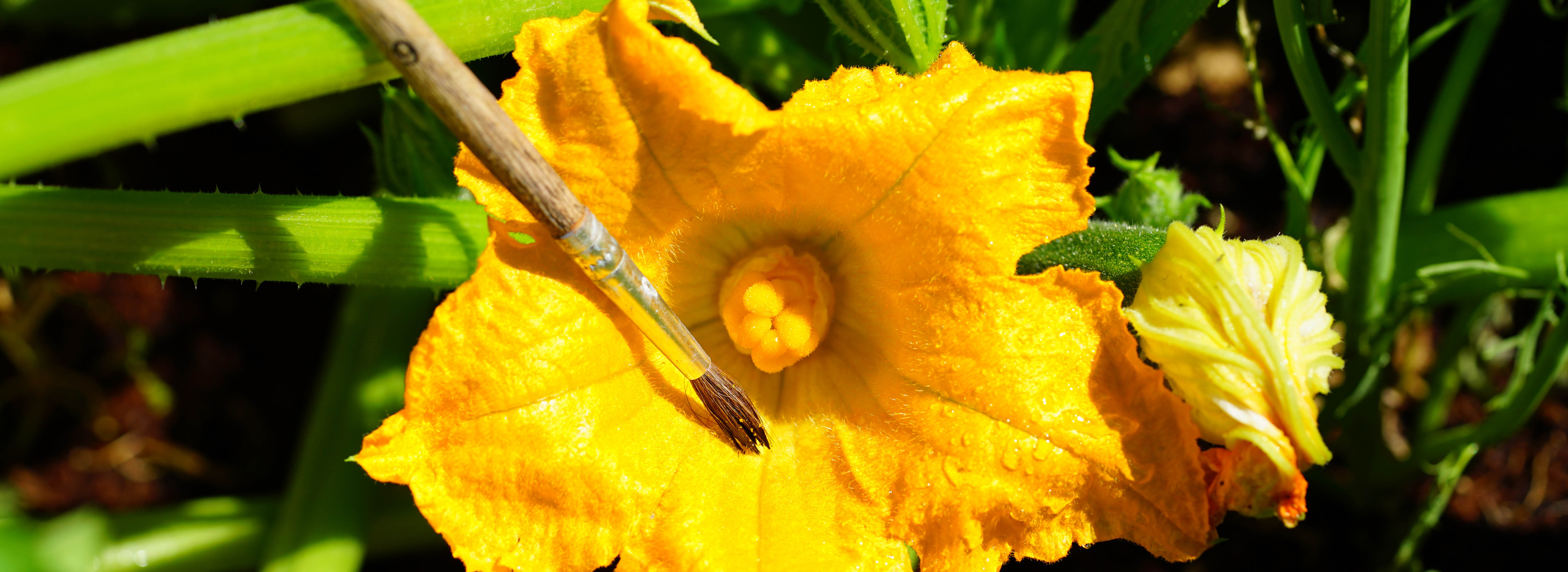
K-State horticulturalist Matt McKernan says a paintbrush can be used to transfer pollen from a male flower to the stigma of the female flower.
July 16, 2026
K-State Extension news service
MANHATTAN, Kan. — It’s common for vegetables like squash, cucumbers and melons to produce flowers but no fruit, said Kansas State University horticulture expert Matt McKernan.
“Most squash, cucumbers and melons have separate male and female flowers on each plant,” McKernan said. “Female flowers have a swollen area beneath the petals while male flowers have a narrow base. Usually, predominately male flowers appear first in the growing season, with the number of female flowers increasing after a few weeks of flowers.”
McKernan suggests checking garden plants to see if both flower types are present. If male and female flowers are present, observe the area for pollinators.
“If few to no pollinators are present, vegetables with separate male and female flowers may not produce fruit due to lack of pollination,” McKernan said.
To pollinate the flowers, use a paintbrush to transfer pollen from a male flower to the stigma of the female flower. McKernan recommends marking that flower and making note of whether it is the only one that sets fruit. If this is the case, the problem is likely a lack of pollinators.
He added that pollinator activity can be inhibited by weather.
“Pollinators are less active on cold or rainy days. The use of insecticides can also harm pollinators. If pesticides are used in the garden, apply them in the evening when pollinators are less active and the flowers have closed for the day,” McKernan said.
Additionally, high temperatures can cause vegetables to drop their blossoms prematurely.
“Tomatoes will stop producing fruit in temperatures above 95 degrees Fahrenheit. Production will resume once temperatures decrease,” he said.
McKernan said it is important to ensure plants are receiving adequate water during this time.
“Applying nitrogen promotes vigorous vegetative growth. However, excessive amounts can inhibit flower and fruit production. Follow fertilizer recommendations to avoid this,” he said.
“It is also very important to provide adequate sunlight and consistent moisture to vegetable plants,” McKernan added. “Too much shade can limit flower production, and dry soils also can lead to blossom drop. Over watering and under watering can both lead to root damage, limiting water uptake needed for good fruit set. Monitor soil moisture closely, especially when vegetables are grown in containers.”
McKernan and his colleagues in K-State's Department of Horticulture and Natural Resources produce a weekly Horticulture Newsletter with tips for maintaining home landscapes and gardens. The newsletter is available to view online or can be delivered by email each week.
Interested persons can subscribe to the weekly newsletter, or submit their garden and yard-related questions, by sending email to hortsupport@ksu.edu. More information also is available at your local K-State Extension office.
# # #

K‑State Extension is a short name for the Kansas State University Cooperative Extension Service, a program designed to generate and distribute useful knowledge for the wellbeing of Kansans. Supported by county, state, federal and private funds, the program has county extension offices statewide. Its headquarters is on the K‑State campus in Manhattan. For more information, visit https://extension.ksu.edu. K-State Extension is an equal opportunity provider and employer.