K-State plans three meetings to outline winter canola management
Crop continues to gain foothold in Great Plains
At a glance: Kansas and Oklahoma canola growers will have three opportunities in early August to learn how the crop fits into profitable, sustainable cropping systems across the Great Plains.
More information: Mike Stamm, mjstamm@ksu.edu
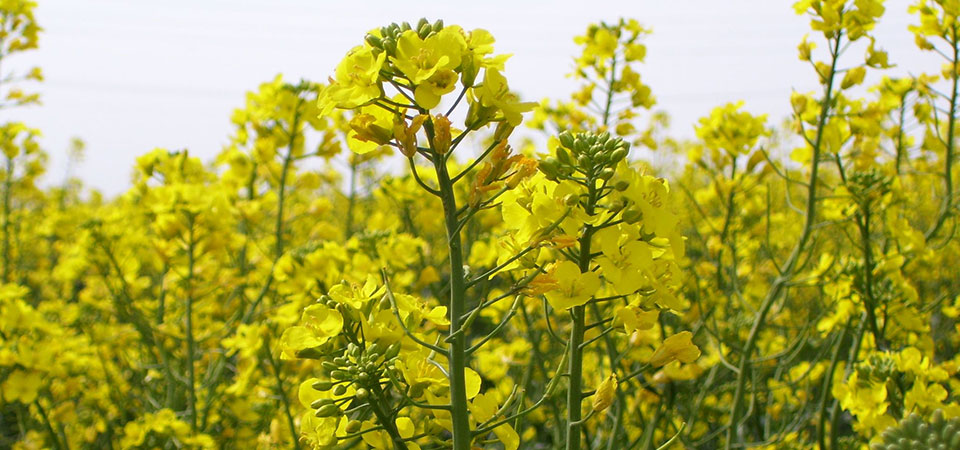
Winter canola continues to play an important role in Kansas and the region as a rotation crop with wheat and other small grains, helping farmers manage weeds, break disease cycles and diversify income.
Aug. 3, 2026
By Pat Melgares, K-State Extension news service
MANHATTAN, Kan. – Kansas and Oklahoma canola growers will have three opportunities in early August to learn how the crop fits into profitable, sustainable cropping systems across the Great Plains.
Kansas State University Extension canola breeder Mike Stamm will present on a variety of performance factors while others will share the latest information on winter canola management and marketing opportunities.
The schedule includes:
- Aug. 4 – Enid, Oklahoma. 9:30 a.m., Chisholm Trail EXPO Center, RSVP to jrsholar@aol.com.
- Aug. 5 – Cimmaron, Kansas. 10 a.m., Gray County K-State Extension, RSVP to canola@scoular.com.
- Aug. 6 – Kingman, Kansas. 10 a.m., Kingman Expo Center, RSVP to canola@scoular.com.
The Kansas meetings are sponsored by Scoular, which in 2023 recommissioned a grain processing facility in Goodland, Kansas to crush canola and soybean seeds.
Stamm said winter canola continues to play an important role in Kansas and the region as a rotation crop with wheat and other small grains, helping farmers manage weeds, break disease cycles and diversify income.
“Canola gives growers another tool in the toolbox,” he said. “It can improve overall system health while opening doors to new markets for high-quality oilseed.”
A featured guest at the Aug. 4 meeting in Enid will be John Kirkegaard, a farming systems specialist from Australia who has worked extensively with canola in dryland environments.
Kirkegaard, who is in Kansas this summer as a Fulbright Scholar through Kansas State University, will discuss how Australian producers have integrated canola into their rotations and what lessons may apply to the southern Great Plains.
“Having someone with Dr. Kirkegaard’s experience is a real benefit for our growers,” Stamm said. “He brings a global perspective on how canola can add resilience and profitability to the farm.”
In addition to hearing from Stamm and Kirkegaard, attendees will receive updates on the 2026 production year, variety selection, planting dates, and harvest considerations. Representatives from Scoular will outline current and emerging marketing channels for canola grown in the region.
Stamm encouraged growers, crop advisers and agribusiness representatives to attend.
“These meetings are a chance to ask questions directly and decide whether canola is the right fit for your operation,” he said.
More information on the upcoming meetings is available by contacting Stamm by email, mjstamm@ksu.edu.
***

K‑State Extension is a short name for the Kansas State University Cooperative Extension Service, a program designed to generate and distribute useful knowledge for the wellbeing of Kansans. Supported by county, state, federal and private funds, the program has county extension offices statewide. Its headquarters is on the K‑State campus in Manhattan. For more information, visit www.ksre.ksu.edu. K-State Extension is an equal opportunity provider and employer.