It’s time to plant salad in the fall garden
K-State horticulture expert says salad crops favor slightly cooler soils
At a glance: Radishes, spinach, turnips, mustard, lettuce and other leafy greens can be planted from mid-August to early September, says K-State horticulture expert Matt McKernan.
More information: Matt McKernan, hortsupport@ksu.edu
Related: K-State Horticulture Newsletter | Kansas Garden Guide | Vegetable Garden Planting Guide | Recommended Vegetable Varieties | Buying Guide for Kansas Grown Fruits and Vegetables
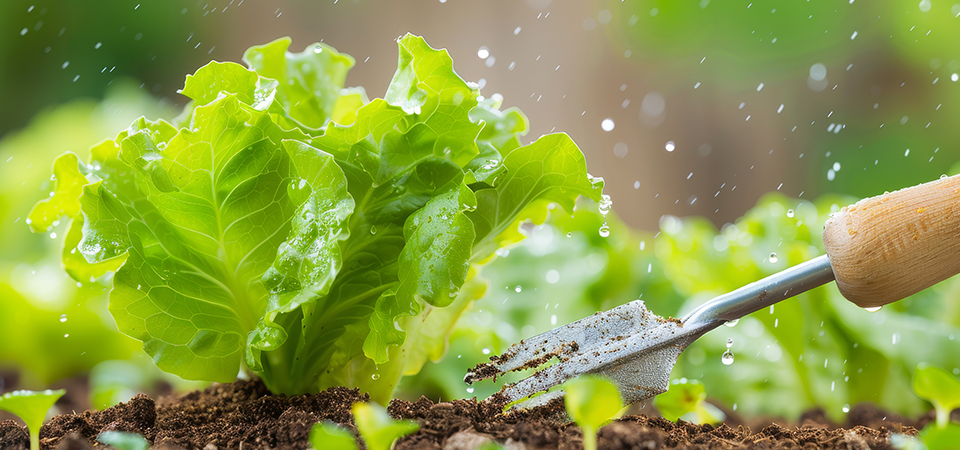
Lettuce is among the fall crops that grow well because of lower soil temperatures.
Aug. 20, 2026
K-State Extension news service
MANHATTAN, Kan. – Got Salad?
Kansas State University horticulture expert Matt McKernan says Kansas gardeners can maximize the growing season in Kansas by taking advantage of the fall growing season for many vegetable crops.
“Radishes, spinach, turnips, mustard, lettuce and other leafy greens can be planted from mid-August to early September, extending the harvest into fall,” McKernan said. “If you plan to plant seeds into the ground, plant them slightly deeper than recommended for spring. This will give seeds access to slightly cooler soil that retains more moisture.”
Growing a salad garden means providing regular water until the seeds germinate, according to McKernan. “Sprinkle a light layer of compost over the top of the seeds to prevent the soil from forming a crust,” he said.
An alternative way to grow crops suitable for a salad is to use a bag of potting media. McKernan outlined steps to grow leafy greens in this manner:
- Place the unopened bag of potting soil on a pallet, cart, or similar support. This will allow you to move the planting, as needed. If not placed on a support, the bag should not be moved after planting to avoid displacing seeds.
- Lay the bag flat and cut open the top-facing, long side of the bag to expose the potting media.
- Puncture several small holes or slits in the bottom side of the bag to allow excess water to drain. This helps prevent plant roots from drowning or rotting, while also preventing excess fertilizer salts from building up in the bag.
- Mix fertilizer into the potting media according to the product instructions, if it is not already included as part of the potting media.
- Plant the seeds as recommended on the packet. Shallow-rooted salad greens are best suited for this growing method, including lettuce, kale, mustard greens, spinach, or Swiss chard.
“One benefit of growing fall greens in a potting media bag is the temperature of the media can be regulated by relocating the bag,” McKernan said. “This is particularly helpful during August and September when the heat can hinder germination and negatively affect flavor of certain leafy greens and cole crops.”
McKernan added that due to the limited amount of growing space in a potting media bag, it is important to monitor moisture closely while the crop is growing.
McKernan and his colleagues in K-State's Department of Horticulture and Natural Resources produce a weekly Horticulture Newsletter with tips for maintaining home landscapes and gardens. The newsletter is available to view online or can be delivered by email each week.
Interested persons can subscribe to the weekly newsletter, or submit their garden and yard-related questions, by sending email to hortsupport@ksu.edu. More information also is available at your local K-State Extension office.
***

K‑State Extension is a short name for the Kansas State University Cooperative Extension Service, a program designed to generate and distribute useful knowledge for the wellbeing of Kansans. Supported by county, state, federal and private funds, the program has county extension offices statewide. Its headquarters is on the K‑State campus in Manhattan. For more information, visit https://extension.ksu.edu. K-State Extension is an equal opportunity provider and employer.