In the Garden: Pick pears now, fertilize strawberries
K-State horticulture expert shares tips on growing popular fruit crops
At a glance: K-State horticulture expert Matt McKernan says pears are typically ready for harvest now through October, depending on the variety. Strawberry beds should be fertilized in August.
More information: Matt McKernan, hortsupport@ksu.edu
Related: K-State Horticulture Newsletter | Kansas Garden Guide | Buying Guide for Kansas Grown Fruits and Vegetables
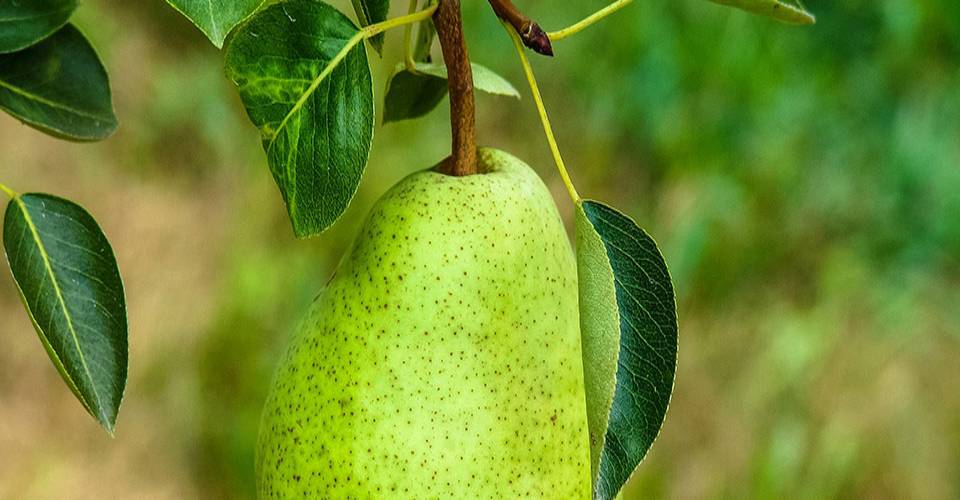
Harvesting pears at the right time will bring out natural sweet flavors, says K-State horticulture expert Matt McKernan.
Aug. 21, 2026
K-State Extension news service
MANHATTAN, Kan. – Two of Kansas gardeners’ favored fruits may need attention now as the calendar creeps toward September.
Kansas State University horticulture expert Matt McKernan said pears are typically ready for harvest now through October, depending on the variety.
“Pears left to ripen on the tree may develop a gritty texture,” McKernan said. “Harvesting pears at maturity but before peak ripeness, along with a chilling period, can bring out the sweet flavors and a better texture.”
McKernan said pears change to a pale green or yellowish-green color when ready for harvest. Some varieties will have brown spots on the skin.
“These spots are the fruits’ ‘breathing pores,’ known as lenticels,” he said. “On immature pears, the lenticels are white or greenish-white. Mature fruit will develop a smoother, waxy coating and separate easily from the branch when twisted. There should also be a pear aroma at maturity.”
To harvest pears, carefully lift the fruit at an angle and twist. Avoid damaging the twig where it is attached because that may negatively impact fruit development next year.
McKernan said harvested pears will still be quite firm or hard, and should be allowed to finish ripening indoors, in temperatures below 75 degrees Fahrenheit. Refrigerate pears at 31 to 50 degrees Fahrenheit with high humidity (ideally in a perforated bag) for two days to several weeks, depending on the variety and how quickly you plan to use the fruit.
“Remove pears from the cold storage and allow them to sit at 60-65 F for 1-3 weeks to finish ripening,” he said. “Fruit may rot instead of ripening if conditions are too warm.”
Mid-August is also a good time to give strawberry beds some attention, McKernan said.
“Strawberries should be fertilized to support fruit development next spring,” he said. “Sunlight and warm temperatures from June through August promote runners and daughter plant development. As the daylight hours decrease and temperature begins lowering into September and October, fruit buds start to develop, which is why (August) is the best time to fertilize to encourage good fruit set.”
Nitrogen can be applied as part of a complete fertilizer (such as 12-12-12) at a rate of ¾ to 1 pound per 25 row feet, according to McKernan.
“Alternatively, urea (46-0-0) can be applied at a rate of ¼ to 1/3 pounds per 25 row feet,” he said. “With either type of fertilizer, apply one-half inch of water after fertilizing to dissolve and move the nitrogen into the soi lwhere plant roots can access it.”
McKernan and his colleagues in K-State's Department of Horticulture and Natural Resources produce a weekly Horticulture Newsletter with tips for maintaining home landscapes and gardens. The newsletter is available to view online or can be delivered by email each week.
Interested persons can subscribe to the weekly newsletter, or submit their garden and yard-related questions, by sending email to hortsupport@ksu.edu. More information also is available at your local K-State Extension office.
***

K‑State Extension is a short name for the Kansas State University Cooperative Extension Service, a program designed to generate and distribute useful knowledge for the wellbeing of Kansans. Supported by county, state, federal and private funds, the program has county extension offices statewide. Its headquarters is on the K‑State campus in Manhattan. For more information, visit https://extension.ksu.edu. K-State Extension is an equal opportunity provider and employer.