How to increase bloom production of peonies
K-State horticulture expert suggests dividing peonies this fall
At a glance: Early fall is the best time to divide peonies, said K-State horticulture expert Cynthia Domenghini. Doing so can help increase bloom production for many years to come.
More information: Matt McKernan, hortsupport@ksu.edu
Related: Prairie Bloom Perennial Flowers
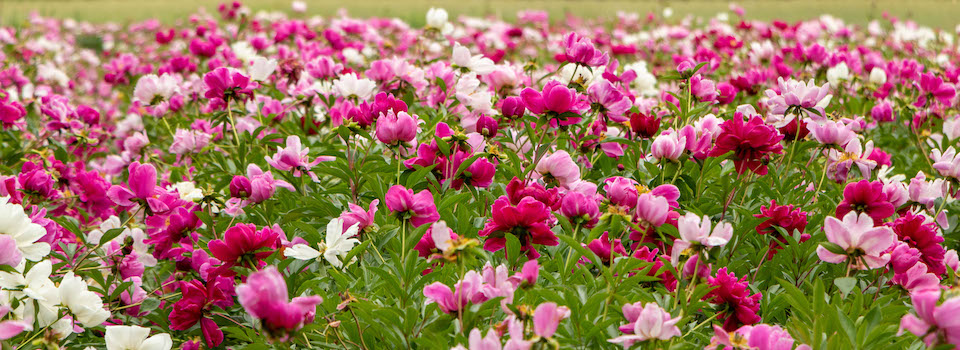
K-State horticulture expert Matt McKernan says that, traditionally, peonies possess at least five broad petals in one or two rows.
August 14, 2026
K-State Extension news service
MANHATTAN, Kan. — While dividing peonies is not required, Kansas State University horticulture expert Matt McKernan said doing so can increase bloom production, reduce disease and provide more peony plants for the garden.
“If you choose to divide your peonies, it needs to be done this time of year,” McKernan said.
To start dividing peonies, McKernan said gardeners should cut the stems just above the soil surface. Next, dig up the entire root system and remove soil from the roots.
“Divide the root clump into small sections using a sharp knife,” McKernan said. “Ensure each section has 3-5 buds as well as healthy roots.”
When preparing to replant peonies, the planting location should receive sunlight at least half the day. Dig a hole large enough to fit the roots of the divided peonies so the buds will be covered by 1-2 inches of soil.
“Peony plants buried too deep underground may not flower,” McKernan said. “This is the most common mistake Kansas gardeners make, so ensure the soil is packed firmly under the peony roots when replanting so that the plant does not settle deeper into the ground after planting.”
After planting, water thoroughly. This helps not only hydrate the roots, but to further settle the soil around the roots. Check bud depth on the roots again after watering.
Space dwarf peonies at least two feet apart and standard peonies four feet apart. To protect the newly divided peonies in cold weather, add a layer of straw, leaves, mulch or compost over the crown of the plant after the soil freezes.
McKernan warns that it may take a couple years for divided plants to return to full bloom productivity.
McKernan and his colleagues in K-State's Department of Horticulture and Natural Resources produce a weekly Horticulture Newsletter with tips for maintaining home landscapes and gardens. The newsletter is available to view online or can be delivered by email each week.
Interested persons can subscribe to the weekly newsletter, or submit their garden and yard-related questions, by sending email to hortsupport@ksu.edu. More information also is available at your local K-State Extension office.
***

K‑State Extension is a short name for the Kansas State University Cooperative Extension Service, a program designed to generate and distribute useful knowledge for the wellbeing of Kansans. Supported by county, state, federal and private funds, the program has county extension offices statewide. Its headquarters is on the K‑State campus in Manhattan. For more information, visit https://extension.ksu.edu. K-State Extension is an equal opportunity provider and employer.